After six years of cleaning up Sydney’s harbours as a free service, all the while lobbying City of Sydney for support, Seabin has secured a breakthrough partnership deal.
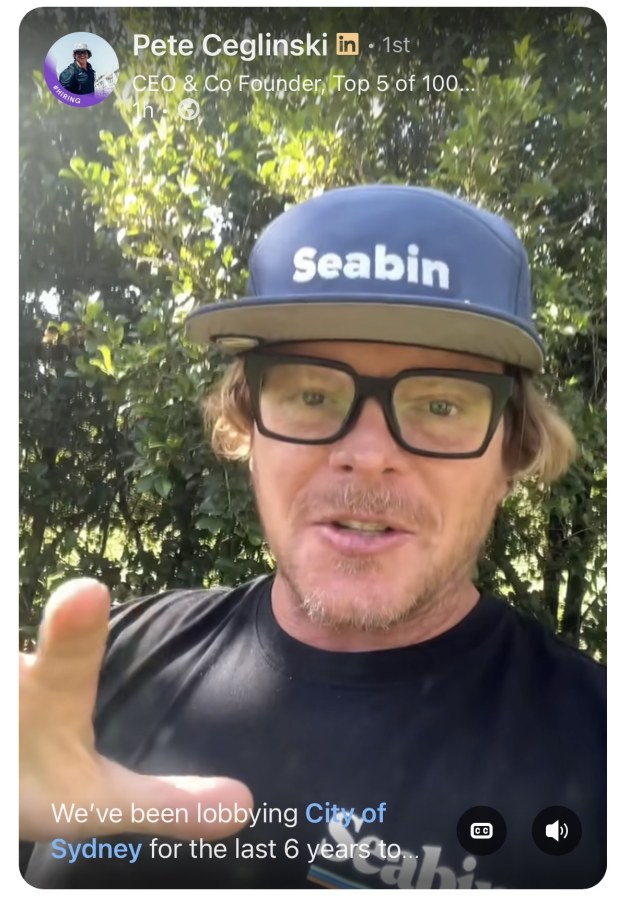
Pete Cegklinski, CEO and co-founder of Seabin, made the announcement on social media, noting that the new partnership will see City of Sydney cover half of its operational costs for Sydney harbour clean up, and will back pay Seabin on the same terms for its work since July 2020.
He said previously, Seabin was undertaking the clean-up with support from communities, businesses and individuals.
“After six years of cleaning up Sydney Harbour, getting the data of all the plastic pollution that’s coming off the city streets and into the harbour, we have entered a public-private partnership with City of Sydney… this is huge”.
This announcement comes in the wake of Seabin's partnership with The Magnum Ice Cream Company which made PKN headlines in February.
Seabin’s smart pollution capture units operate in marinas and urban harbours, collecting floating debris while also generating data on the types and volumes of waste recovered. Monitoring in Sydney Harbour shows that microplastics account for 54.77 per cent of waste collected, with soft plastics representing 18.69 per cent, making them the second largest category.