Thinkpac will manufacture packaging made from recycled LDPE under the ReCircle project, which has received $3 million in CRC-P funding from the Australian Government.
The company will act as the commercialisation and manufacturing partner for the $7.6 million initiative, converting recycled LDPE from ReCircle’s decentralised recycling units into its 100 per cent post-consumer recycled ReCree8 packaging.
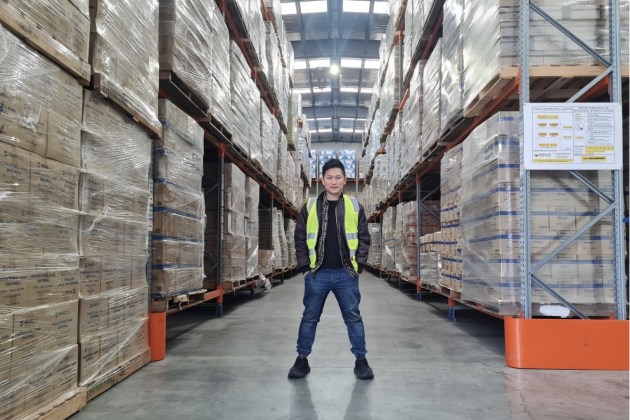
Speaking to PKN, Calvin Ng, founder of thinkpac, said the company’s role focuses on the final stage of the recycling supply chain.
“The recycling industry has historically obsessed over collection, sortation and recycling, but collecting waste is useless if no one buys the output,” Ng said.
“As a vertically integrated recycler and manufacturer with over 40+ years of offshore experience, and more than 10 years of local experience in packaging product solutions, thinkpac provides the end-to-end know-how and end-market channel. We are the commercial anchor that turns a sorted waste stream into a circular supply chain.”
Under the ReCircle model, autonomous recycling units process soft plastic waste on-site and convert it into LDPE pellets. Thinkpac will then manufacture packaging products, including pallet wrap, industrial covers and bin liners.
Ng said the company is working with CSIRO and RMIT University to define the technical specifications required for the decentralised recycling units.
“In this collaboration, we define the technical specifications that the decentralised units must meet. Once the robotic units process the waste into LDPE pellets, thinkpac manufactures these PCR packaging products for the supply chain partners,” he said.
“If they are derived from 100 per cent PCR sources, then we would include them into our ReCree8 product categories.
“Australia's system failed because it treated recycling as a waste management problem rather than a raw material manufacturing process, relying heavily on exporting waste or in some cases, landfilling them due to a mismatch to policy aspirations and infrastructure capability,” Ng said.
“thinkpac changes the equation by engineering domestic recycled resin back into high-performance packaging and selling it, which creates actual market demand for finished PCR products.”
Ng argues that capturing waste at the source improves feedstock quality compared with municipal waste streams.
“By placing the tech directly at massive post-industrial generation sites, we secure a homogenous, clean stream of LDPE stretch wrap. High-purity feedstock is non-negotiable for manufacturing high-tensile PCR flexible packaging,” Ng said.
“This clean feedstock, combined with our manufacturing IP, allows us to produce 100 per cent PCR film that matches virgin performance.”
The packaging is supported by third-party GECA certification, which Ng said provides brand owners with “verifiable proof of sustainability”.
Ng said wider adoption of recycled packaging will depend on procurement decisions from industry and government.
“Enterprise businesses and government agencies must mandate verifiable, domestic PCR content in their packaging tenders,” he said.
“Capital flows where demand goes. If major brands commit to buying the finished PCR product, this decentralised model will scale nationally.”