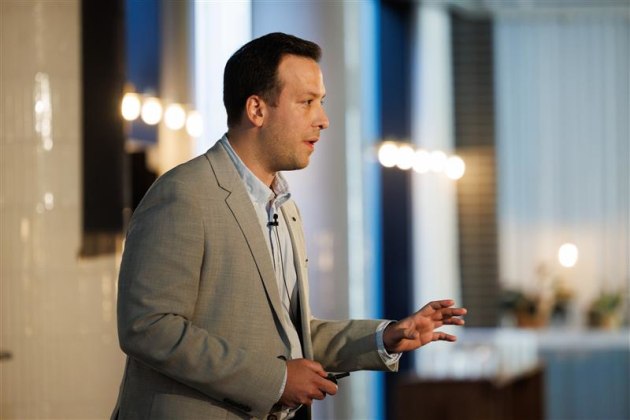
New lifecycle data is challenging conventional thinking on packaging sustainability. Giancarlos LaRocca, marketing director for Oceania at Tetra Pak, argues that the industry must shift its focus upstream – to materials, production and distribution – where the vast majority of emissions occur.
Australia’s packaging debate has long centred on recycling and end-of-life outcomes. But new Life Cycle Assessment (LCA) findings suggest the industry’s biggest emissions opportunity lies much earlier in the value chain. Research conducted by Tetra Pak in partnership with thinkstep-anz indicates that around 98 per cent of the carbon footprint of beverage packaging is generated during production and distribution, with end-of-life contributing just 2 per cent – raising questions about whether the current focus is misplaced.
PKN: Does this data suggest the industry has been focusing on the wrong part of the packaging lifecycle?
LaRocca: What stands out is how clearly the data challenges the prevailing narrative. Much of the conversation has focused on waste and recycling, yet the LCA shows emissions are overwhelmingly generated before a package ever becomes waste. It reinforces that material choice, manufacturing and distribution efficiency are the critical levers – particularly in a market like Australia, where long supply chains amplify both cost and carbon impacts, and where ongoing supply chain disruption and oil-linked material volatility are adding further pressure.
PKN: Why do you think the industry has historically focused so heavily on end-of-life solutions like recycling?
LaRocca: End-of-life has been the most visible part of sustainability – it is what consumers see and what regulators measure. That has made recycling the default focus. The result is that packaging has often been designed to fit existing waste systems, rather than being optimised for its full lifecycle impact. While waste remains important, this approach has limited progress on addressing upstream emissions.
PKN: What does a shift towards “start-of-life” thinking look like in practical terms for Australian manufacturers?
LaRocca: It means designing packaging for its lowest climate impact from the outset. In practice, that includes selecting lower-carbon materials, reducing reliance on fossil-based inputs, and designing lighter, more efficient formats. It also means optimising pack shapes for transport efficiency and aligning material choices with where Australia’s waste system is heading, rather than where it is today.
PKN: Where are the biggest opportunities to reduce emissions during the production phase of beverage packaging?
LaRocca: The largest opportunity sits with raw materials – choosing lower-carbon substrates and reducing material mass delivers the greatest impact. Beyond that, switching to renewable electricity in manufacturing and improving energy efficiency are key levers. For energy-intensive formats such as glass, increasing recycled content and lightweighting remain critical.
PKN: How should businesses approach material selection when balancing recyclability with carbon impact?
LaRocca: The starting point should be to select the lowest-carbon material that meets performance requirements, and then optimise for recyclability. Focusing on recyclability alone can be misleading if it leads to heavier or more energy-intensive packaging, given that most emissions occur upstream. A full lifecycle perspective is essential to making informed decisions.
PKN: Do current policy frameworks adequately address lifecycle emissions, or is there a gap?
LaRocca: There is a clear gap. Current frameworks remain heavily focused on recyclability and waste outcomes, even as businesses are increasingly required to measure and reduce Scope 3 emissions across their supply chains. This is creating a growing disconnect between how companies are measured on emissions and how packaging is regulated, highlighting the need for policies that explicitly incorporate lifecycle emissions.
PKN: What are the biggest barriers for companies trying to reduce upstream emissions in their packaging supply chains?
LaRocca: The barriers are largely systemic rather than technical – legacy equipment, supply chain complexity, regulatory uncertainty and commercial risk all play a role. Without policy and infrastructure evolving to support lower-carbon materials, many businesses remain constrained by existing systems.
PKN: Beyond carbon reduction, what additional benefits can businesses expect from focusing earlier in the lifecycle?
LaRocca: There are clear operational and commercial benefits. Lighter packaging improves logistics efficiency and can reduce costs, while early adoption of lower-carbon materials helps future-proof businesses against tightening regulation. More broadly, improving production efficiency delivers value across the supply chain, reinforcing that sustainability and business performance are increasingly aligned.
As the data shows, the industry’s biggest emissions gains will not come from what happens after use, but from what is designed in from the start. The challenge now is whether policy, infrastructure and industry thinking can shift quickly enough to match that reality.