Box Divvy, a community-based food network operating across NSW, Victoria and the ACT, has built a soft plastics collection and recycling system across its neighbourhood hubs, diverting about 2.5 tonnes from landfill each month.
Flexible plastics such as bread bags, produce bags, chip packets and bubble wrap cannot be placed in kerbside bins because they jam sorting machinery. Less than 10 per cent of plastic is recycled globally, and soft plastics are among the least recovered materials in Australia, largely excluded from kerbside systems and reliant on voluntary drop-off schemes.
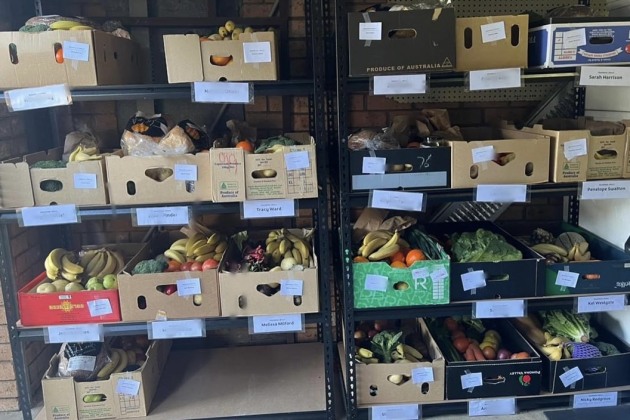
Box Divvy operates more than 350 neighbourhood food hubs and describes itself as “the Unsupermarket”, a decentralised model connecting members with seasonal produce and pantry goods from mostly Australian suppliers. The network says its structure reduces packaging by distributing food through hubs rather than individual supermarket shelves, with the soft plastics program extending that approach.
“If we are serious about reshaping food systems, we cannot ignore the packaging that comes with them,” said Anton van den Berg, co-founder of Box Divvy. “We talk about transparency and fairness in supply chains. Taking responsibility for soft plastics is part of that same commitment.”
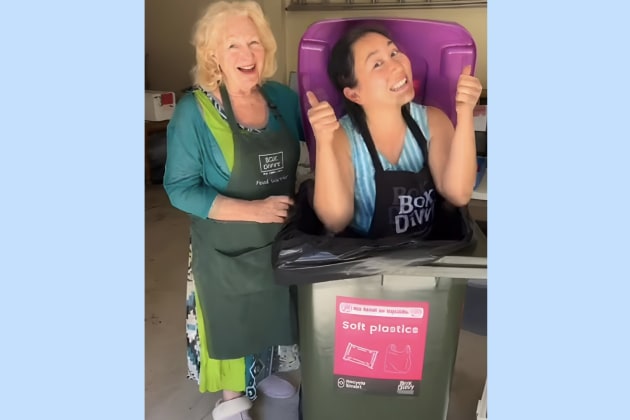
Over the past 12 months, Box Divvy has established infrastructure to scale the program, with the NSW Environment Protection Authority contributing 50 per cent of the upfront cost of 500 dedicated 240-litre soft plastics bins. Box Divvy funded the remainder and is covering ongoing collection and processing costs.
The first 140 bins were installed in December, with a further 170 since deployed. About 90 per cent of Box Divvy hubs in NSW and the ACT now have a soft plastics bin, with further sites joining. The group expects monthly volumes to approach three tonnes as rollout continues.
Members can drop off scrunchable plastics at their local hub on collection day at no cost. Hub operators are paid by Box Divvy to host and manage bins. Collections are carried out weekly by sustainability partner ReSmart, with material transported to a Sydney aggregation warehouse before being sent to an EPA-approved Victorian processor, where it is to be converted into resin and made into new food-grade bags.
Box Divvy plans to purchase the recycled bags for use in packaging dry goods such as nuts and beans sold through its network.
Mikey Duke from ReSmart said rebuilding confidence in soft plastics recycling depends on end markets.
“Rebuilding confidence in soft plastics recycling starts with reliable infrastructure,” Duke said. “ReSmart's role in this partnership, providing consistent weekly collection and a clear pathway from neighbourhood hub to processor, is what makes verified outcomes possible. When the logistics are right, soft plastics can then be successfully remanufactured into new products, and that's exactly what this program delivers.”
The initiative builds on a 2024 pilot in the Southern Highlands, where six hubs collected 750 kilograms within months. Box Divvy said scaling the model required coordination across logistics, processing and funding partners. Collection volumes are tracked weekly to verify diversion rates and adjust logistics as the program expands.
Anton van den Berg said the model shows how community-based supply chains can manage their own waste streams.
“Circular economy only works if someone closes the loop,” he said. “We are in a position to do that within our own network. If communities control parts of the supply chain, they can also take responsibility for the waste that flows through it.”