
Las Vegas was buzzing with more than its trademark neon and nightlife in late September as the global packaging and processing industry descended on the city for Pack Expo Las Vegas 2025. Packaging journalist John Henry was on the ground for PKN.
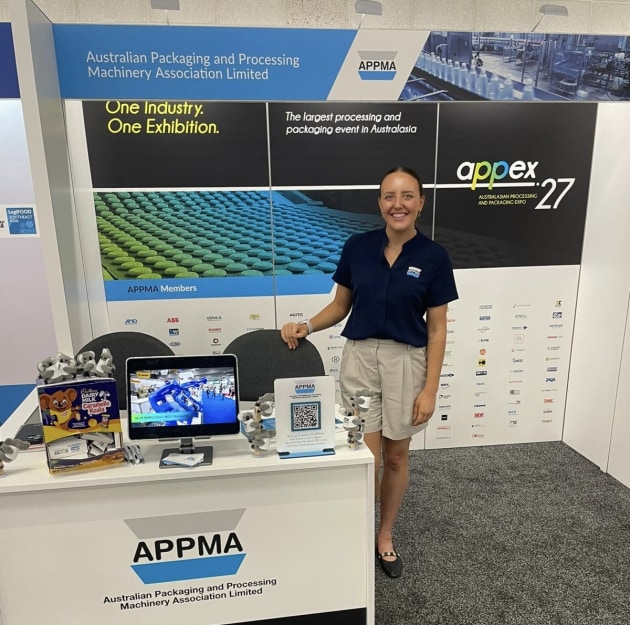
Filling four halls of the Las Vegas Convention Center, the Pack Expo show floor pulsed with innovation – from AI-driven automation and smart robotics to new materials and sustainability-focused systems redefining production efficiency.
Produced by PMMI, The Association for Packaging and Processing Technologies, this year’s edition marked the largest and most comprehensive Pack Expo yet, attracting over 50,000 industry professionals and setting a new benchmark for scale, energy, and technological ambition.
As PMMI president and CEO Jim Pittas noted, “From AI and robotics to next-generation sustainability, the technologies on display aren’t just meeting today’s needs – they’re driving the growth, efficiency, and innovation that will define packaging and processing for the next 30 years.”
Among the global exhibitors, several Australian companies stood out for their innovation and engineering expertise.
TNA raises the bar
TNA Solutions of Sydney Olympic Park, a major player in snack and food processing and packaging, delivered a comprehensive display across both sectors. Dominating the booth was the conti-pro PEL 3 continuous fryer, designed for all types, sizes and shapes of pellets. Available in various configurations to meet different capacity requirements, it represents a step forward in frying technology. Four belts and precision temperature control assure consistent, high-quality results every time.
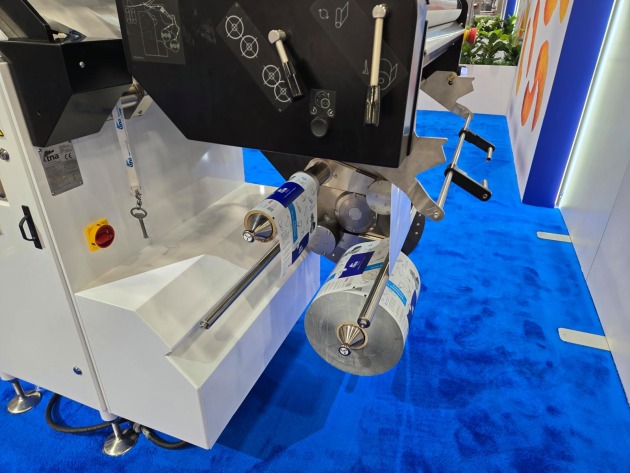
Demonstrating its end-to-end capability from frying to packaging, tna also showcased the robag 3e vertical form-fill-seal system – a refined execution of an industry workhorse. A key feature was the automatic roll-splicing mechanism, enabling non-stop operation. Short stoppages for roll replacement can easily add up: even ten minutes lost daily equates to a week of lost production annually – even more in multi-shift operations.
The splicer eliminates this downtime, allowing continuous running. At 100 packs per minute, that’s an additional 200,000 products per year. As tna notes, it’s time to stop viewing splicers as an expensive luxury – they can pay for themselves in months through increased throughput.
Heat and Control engineers a tight fit
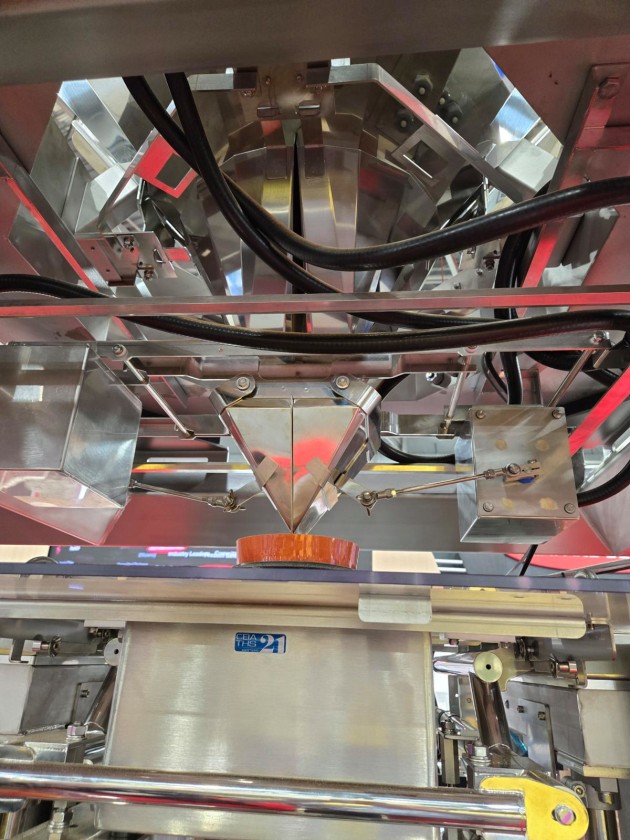
Heat and Control, another leading name in the Australian food and packaging sector, also impressed with its engineering ingenuity. When a client requested a high-speed vertical form-fill-seal machine, the challenge lay in fitting it into a space too short for a standard high-capacity model. The company responded by shortening the lower section of the Ishida bagger, bringing components closer to the floor, trimming the forming tube, and integrating a low-profile metal detector.
What caught the eye was the novel combining scale filler. Instead of a single 360-degree array of weigh buckets, the design uses two semi-circular arrays of eight buckets each, alternating to feed a single drop tube. While one section discharges, the other charges – effectively doubling the speed to achieve 200 packs per minute.
Amcor and HMPS Propac redefine liquid packaging
Amcor, best known for its films, unveiled a striking VFFS bag-filling system developed in partnership with Australia’s own HMPS Propac, the original designer of the system sold in the US under licence by Amcor. The Liquiflex bag-filling machine stands apart for what it leaves out – a traditional filler. Instead, the forming tube remains full of product while advanced sealing technology seals through the product itself. This not only ensures precise volume control but also eliminates headspace in the finished bag, creating a more compact, efficient package.
Changeover time is another common source of productivity loss, and Liquiflex takes an aggressive stance on minimising it. Filler changeovers are virtually eliminated, forming-tube changes are simple and toolless, and most other adjustments are handled automatically via product selection on the HMI menu. Even modest reductions in changeover time can yield significant gains in overall output.
AI takes inspection to the next level
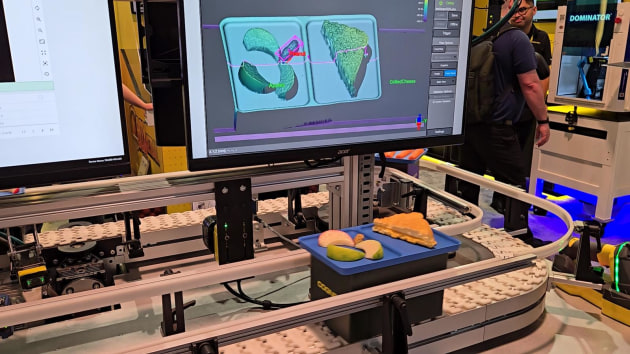
Artificial Intelligence was also a strong theme across the exhibition. Cognex, long recognised for its vision systems, demonstrated a simple yet powerful integration of camera and AI to inspect food trays. In the demonstration, each tray contained different items – apples, pickles, a sandwich – and the system identified, counted and checked placement, rejecting any that were incorrect. While such capabilities have existed for years, this example stood out for its simplicity and effectiveness – a streamlined solution that “just works”.
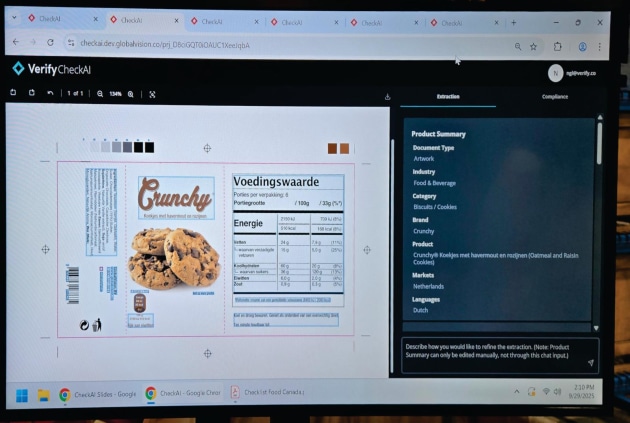
Keeping pace with global regulatory demands, GlobalVision previewed VerifyCheckAI, an intelligent system that analyses packaging graphics for compliance. Using AI, it verifies every element of a label against applicable regulations and brand specifications – an invaluable tool as companies navigate increasingly complex cross-border labelling requirements.
Always an education
The scale of Pack Expo makes it impossible to see everything, but every corner offers learning and inspiration. It’s always an education – and always fascinating to see where the next wave of innovation will take us.

With Australian innovation clearly resonating on the international stage, PKN continues to follow the nation’s technology trailblazers as they compete, collaborate, and lead in global markets. Reports like this from Pack Expo Las Vegas underscore Australia’s growing influence in packaging and processing.
This article was first published in the November–December 2025 print issue of PKN Packaging News, p46