


Tetra Pak has launched the first carton made entirely from plant-based, renewable packaging materials.
The Tetra Rex carton is a world first. It is made with bio-based low-density polyethylene (LDPE) films and bio-based high-density polyethylene (HDPE) caps, and Forest Stewardship Council (FSC) certified paperboard. Both film and caps are derived from sugar cane.
The new carton was developed by Tetra Pak and Braskem, one of the world’s leading biopolymers producers, and will be commercially available in early 2015. Tetra Pak customers using the standard 1 litre Tetra Rex with TwistCap OSO 34 can transfer to the new version with no additional investment or modification to their existing filling machines.
"Environment excellence is one of Tetra Pak's strategic priorities and a driver of our product development activities.Together with suppliers, customers and other stakeholders, we are leading the industry towards 100% renewable packaging. We believe that increasing the renewable content of our packages is not only good for the environment, but also offers our customers a competitive advantage in the overall environmental profile of their products,” stated Charles Brand, vice president, marketing & product management, Tetra Pak.
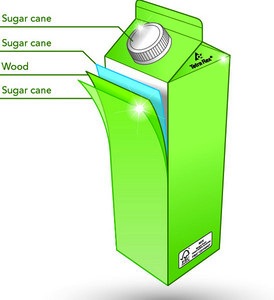
In 2013, Tetra Pak delivered 1.1 billion packages to customers worldwide featuring bio-based caps (made from plastic derived from sugarcane). This was nearly double the number sold in 2012, according to the company's recent sustainability report.
On average, Tetra Pak's cartons were already made of 70% renewable resources, and bio-based caps increase the renewable content of those packages by approximately 4%
In July, Tetra Pak US and Canada launched its campaign, "Moving To The Front: a call for a new industry commitment to renewability."
This campaign is based on a white paper that highlights issues of resource scarcity and encourages suppliers, manufacturers, brand owners, NGOs and others to expand focus from the mid and end of the packaging life cycle to the beginning.
Tetra Pak’s position is clear, “We are playing a self-destructive game with the limits of our planet, and the time to change, innovate, and lead is now.”
The campaign highlights the need for industry practices that focus on the importance of sustainable material sourcing and renewable resources in protecting our world's limited natural resources and how these practices can create long-term shared value for businesses and society.


