



Bottles using direct print technology have been produced to celebrate the soccer World Cup.
Belgium beverage producer Brouwerij Martens made bottles with design flexibility for the World Cup using KHS's direct print system.
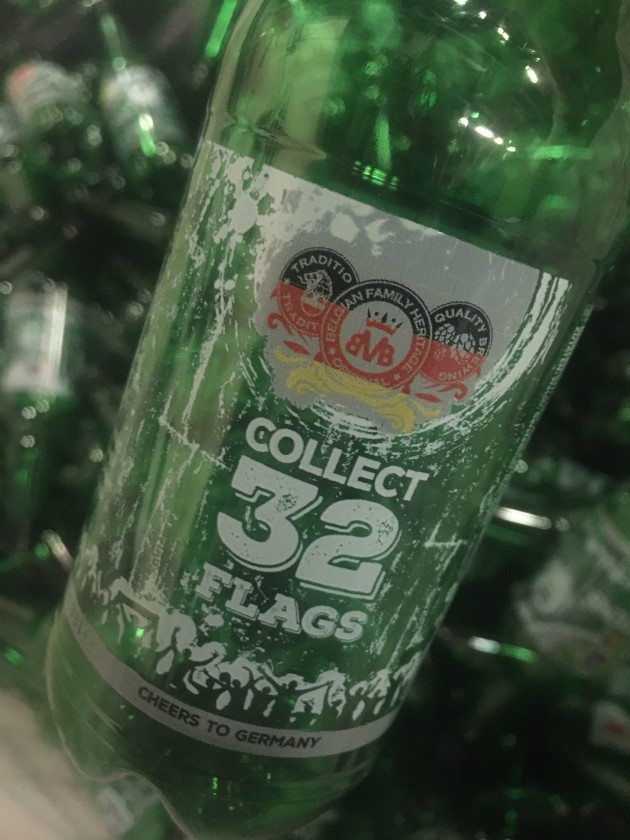
The Martens brewery in Belgium worked with a French supermarket chain to place specially designed bottles on shelves before the game.
To mark the big kick-off in Moscow, Brouwerij Martens offered its premium beer in 32 country-specific bottle designs on the French market.
Various images of the participating nations were printed straight onto the PET bottles using Direct Print Powered by KHS.
Back in 2015, the Belgian brewery was the first beverage producer to launch directly printed bottles to market produced with the prototype of the KHS system.
The customer is able to decide whether the individual designs are printed onto the bottles consecutively or at random.
An additionally developed printed image inspection system ensures the standard of quality at industrial performance level.
Regardless of whether one or one thousand different bottle designs are printed, individual motifs which are adapted for marketing campaigns or even at the customer’s specific request and produced quickly on the Direct Print machine.
The bottles produced using the digital printing process are also 100 per cent recyclable.


