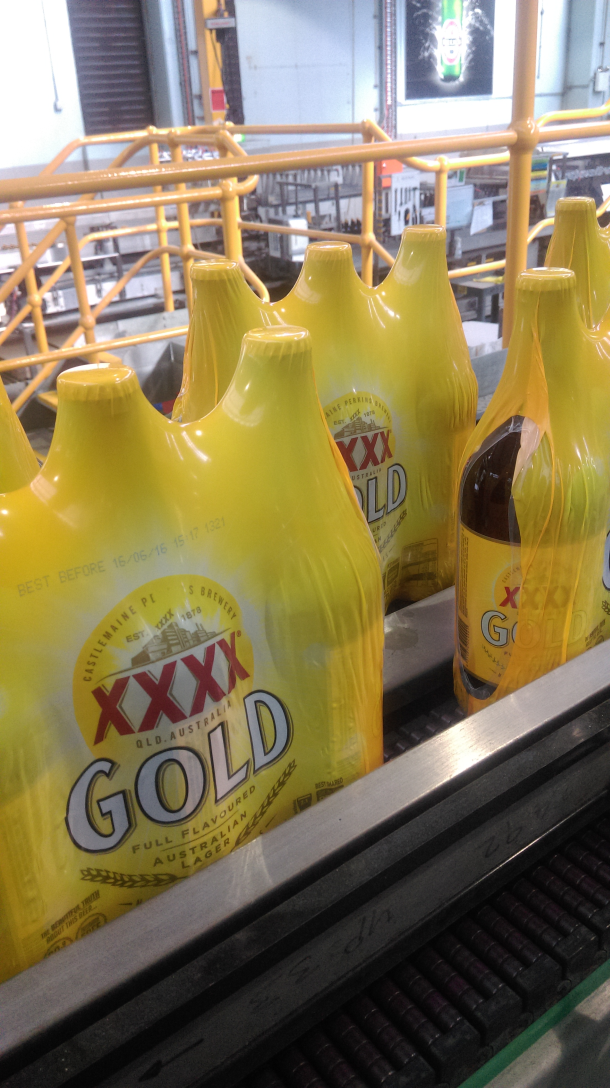
Members of the Australian Institute of Packaging (AIP) were given the opportunity to visit the Tooheys Brewery site in Lidcombe, Sydney last month.
They learnt about the brewing process and the packaging of beer, and took a first-hand look at the brewing operations, packaging and warehousing at the brewery.
Brewery Director Mark Toomey – no relation to James and John Toohey who founded Tooheys in 1869 – says the brewery is large and complex in terms of the nature of the beers it brews and packages.
“We brew with seven different yeast strains, whereas most brewers brew only one or two,” he said.
“We also use a large range of different hops for flavour, aroma and bitterness for different recipes.”
The site is home to a wide range of pack formats and sizes, and two years ago it introduced a new PET line alongside the launch of a brand called Tap King - an in-home draught beer contained within a specially designed four-layer laminate bottle.
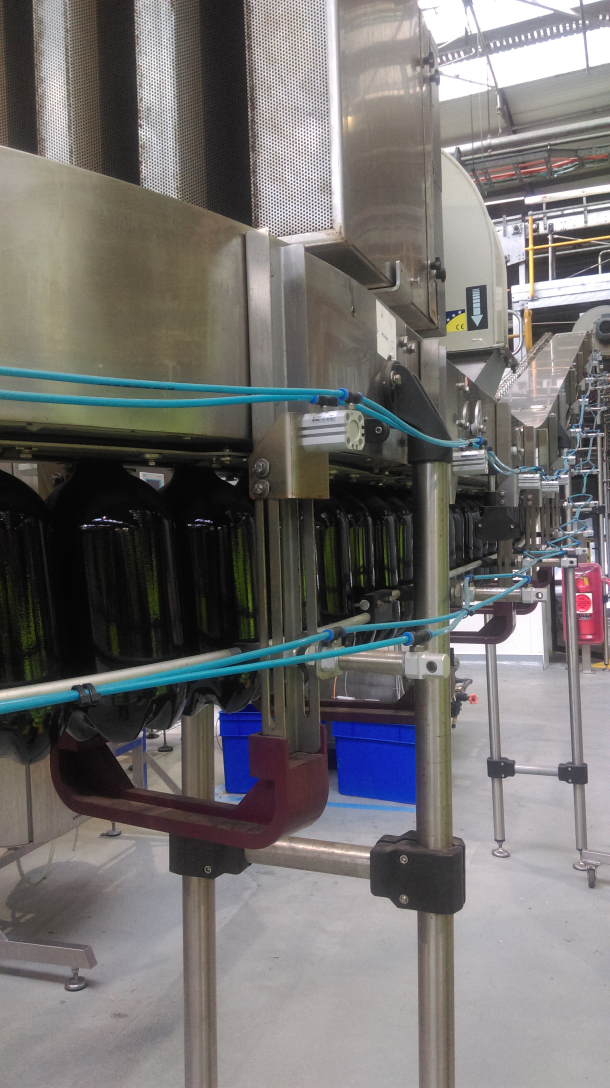
The PET line uses flash pasteurisation and can sterile-fill in a contained environment. The rinser and filler is designed to achieve the right level of micro-stability.
“If conditions are sterile you can extend the shelf life of beer considerably,” Toomey said.
“It delivers a unique freshness and flavour that is subtly different to bottled beer or canned product.”
The line was supplied by filling and packaging systems manufacturer KHS.
“This is the first of its type in the world if you consider the filler, rinser and capper we use.”
In terms of its overall sustainability status, Tooheys has ensured all its board, glass and PET is recyclable, and is pushing boundaries with the lightweighting of its bottles.
“We also have a fully sustainable wastewater treatment plant which produces excellent quality water, and we produce biogas, which is fed into our boiler,” Toomey said.
“We also use natural gas to produce 50% of the breweries electricity needs, which also adds to Tooheys excellent environmental credentials”
“Our spent grain from the brewing process is sold as stock feed; and our waste yeast sold to Mondelez to be used as the key ingredient in vegemite.
The Lidcombe site has been packing and distributing on site since 1954 and brewing since 1978, and Tooheys will host another site visit in January 2016.