• South Australia's ban on provision of free plastic bags in supermarkets has had an unintended effect - households are buying more plastic bin liners.
    South Australia's ban on provision of free plastic bags in supermarkets has had an unintended effect - households are buying more plastic bin liners.
Close×

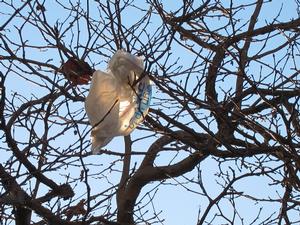
South Australia's ban on the provision of free plastic bags in supermarkets has had an unintended consequence – an huge rise in the sale of plastic bin liners, the  state parliament has been told.

A report tabled in parliament says that despite enthusiastic community support for  the plastic bag ban in the state, sales of bin liners had increased by more than 80 per cent.

The research, conducted late last year by the Ehrenberg Bass Institute for Marketing Science at the University of South Australia, said the plastic bag ban implemented in May 2009 had had a flow-on effect of increasing household purchases of bin liners from 15 per cent to 80 per cent.

The research surveyed 614 supermarket shoppers across the state. It The found the ban on lightweight single-use plastic shopping bags had not stopped households lining their bins, which had led to the increase in the purchase of bin liners.

“A lot of people like to line their bins still, about nine in 10 we think line their bins,” one of the study’s authors, Dr Anne Sharp, told the ABC. “When bags are not given free from the supermarket people now buy bin liners.

She said there was a positive side, however.

“They don’t tend to use as many bin liners as they would receive plastic bags from the supermarket, so they’re not sending the same number to landfill, they’re not throwing plastic bags out,” Dr Sharp said.

Food & Drink Business

End Food Waste Australia (EFWA) and Hort Innovation have launched a new research program to tackle the challenges of harvest surplus and losses on-farm – a $2.5 billion opportunity for vegetable growers.

The federal government has confirmed it will not proceed with the Tax Laws Amendment (Incentivising Food Donations to Charitable Organisations) Bill 2024, saying the legislation contains “deficiencies that compromise its policy intent”, even as food insecurity remains at record levels across Australia.

A lot of food and beverage brands look strong when they’re small. They have one product, one pack, one clear idea and then they grow. That’s usually when things start to unravel, not all at once, but quickly enough to matter. The Creative Method founder and creative director, Tony Ibbotson, explains why – and growth is not the problem.