The global consumption of sustainable barrier coatings is projected to reach 3.7 million tonnes in 2025, valued at US$9.2 billion, according to new research from Smithers.
The report, The Future of Sustainable Barrier Coatings to 2030, examines demand for coatings that balance barrier performance with recyclability, biodegradability, or bio-based content. Smithers projects the market will grow at a compound annual growth rate (CAGR) of 4.8 per cent to 4.6 million tonnes by 2030, reaching a value of US$11.7 billion at constant pricing.
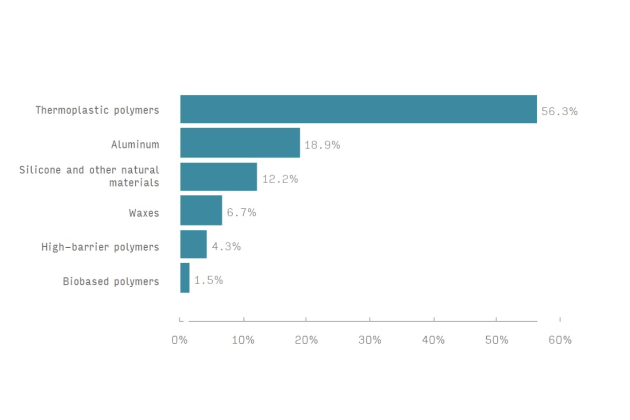
Thermoplastic polymers currently account for 66 per cent of total demand by volume, and are expected to maintain their market share due to increased use of water-based coatings. Aluminium barriers are also forecast to see wider use, while waxes, high-barrier polymers, and silicone coatings are likely to lose ground.
The strongest growth will come from bio-based coatings, with Smithers data showing a CAGR of 25 per cent from US$146.4 million in 2025 to US$446.8 million in 2030. The report notes that these coatings respond to brand owner demand for materials with lower environmental impact. Bio-based polyethylene (PE) and polylactic acid (PLA) coatings are being increasingly adopted, while polyhydroxyalkanoate (PHA) and poly(butylene adipate-co-terephthalate) (PBAT) offer biodegradability advantages.
According to Smithers, improved barrier coatings are expected to support paperboard manufacturers in replacing rigid plastics. Folding carton stocks will remain the largest users of sustainable coatings through to 2030, though corrugated materials are gaining traction.
Food and food-service packaging are identified as key growth areas, as better coatings will help consumer goods companies and restaurant chains move further from single-use plastics.
The report also highlights that upcoming regulatory measures in Europe including design-for-recyclability criteria under the Packaging and Packaging Waste Regulation (2025/40) and extended producer responsibility (EPR) schemes, will help accelerate adoption of recyclable coatings.