A flexible plastic packaging format developed by Amcor has been enlisted to help teenage explorer and climate campaigner Parker Liautaud attempt to set a world record while trekking from the Antarctic coast to the South Pole.
Nineteen-year-old Liautaud is attempting to set a world record, to become the fastest and the youngest person to make the journey. He will also conduct research on the impact of climate change while on his trek.
Trekking with a group under the auspices of the Willis Resilience expedition, Liautaud will depart on 3 December this year, and have 22 days to cover the 640kms from the Ross Ice Shelf to the South Pole, travelling on skis and towing an 82kg sled with necessary equipment and supplies.
As a sponsor of the expedition, Amcor will provide its Duratear technology to provide an extra-secure packaging option for his supplies.
“The packaging we’ve designed for Liautaud offers many unique physical properties compared to ordinary plastic packaging,” the vice-president for research and development for Amcor Flexibles, Bob Biasi, said.
“Typically used for medical kits, Duratear enables us to create a super tough bag that will endure the extreme Antarctic conditions and the incredibly rough journey.
”Liautaud’s food will be safely stored in an Amcor bag that won’t puncture, will stay flexible in sub-zero temperatures, won’t split on high impact and will withstand all the rigours of the 640km trek.”
Developed by Amcor in 2006, the Duratear technology combines different metallocene resins through a blown film process to create a super tough and flexible product.
Crucially, the packaging maintains flexibility at low temperatures of up to -60°C, meaning the packaging won’t stiffen and split in the extreme Antarctic temperatures, and with good clarity, the contents of the bags will be able to be easily distinguished by Liautaud.
Amcor sells approximately 27 million Duratear bags annually, mainly to the healthcare sector.
“Part of the packaging solution includes a clip sourced by Amcor that attaches to the bag and provides a resealable opening feature,” Biasi added.
“This will enable Liautaud to easily open and close the bag while wearing four pairs of gloves, minimising skin exposure and significantly reducing his risk of frostbite.”
On an average day, Liautaud will be on the move for around twelve hours, stopping every 1.5 hours for very short six to eight minute breaks. On these breaks, he will access the high calorie snacks stored in Amcor’s packaging to help take in the 6000 calories he needs daily to survive while expending about 10,000 calories per day.
Liautaud said the Amcor packaging will be critical to his survival on the ice.
“On previous expeditions, we’ve used plastic bags which are basically designed for school lunch boxes,” he said.
“Trekking through extreme wind and cold, while constantly hungry, it’s truly a depressing moment to watch your food bag split open and cashews spill everywhere.
“The food packaging is one of the most important elements of a safe and successful expedition. The gear we need – from clothing, to equipment, to food packaging – needs to be able to keep up with us as we push the boundaries of what’s possible.”
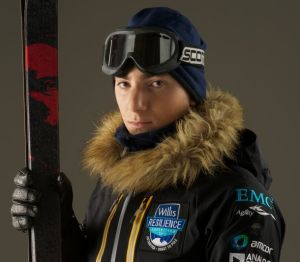 Parker Liautaud: Food packaging will be crucial to his survival in the harsh Antarctic conditions.