German beverage brand Eckes-Granini is making its packaging portfolio even more environmentally-friendly with the help of the KHS Group to develop bottles made of 100 per cent recycled PET (rPET).

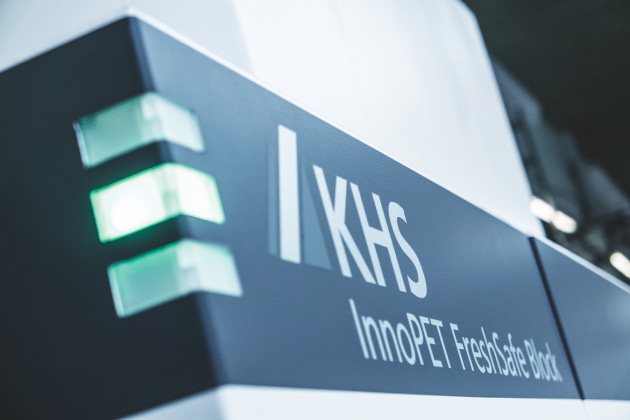
Since May, Eckes-Granini’s 1L hohes C juice bottle has been made entirely of rPET, with KHS’ Bottles & Shapes experts in Hamburg responsible for the bottle’s optimisation – produced on the InnoPET FreshSafe block.
“Bearing the EU’s plastic strategy in mind and the increase in recyclate quotas this prescribes, we’ve now decided to switch to using rPET only,” explains Hermann Naumann, plant manager for Eckes-Granini in Bad Fallingbostel in Lower Saxony.
“We want to be a pioneer in regards to the circular economy and set a good example for the beverage industry.
“We aim to continue steadily reducing our carbon footprint in production and in our packaging. This means not only cutting down on the amount of material used, but also closing the recycling loop.”
For Eckes-Granini, the specifications were clear – switch to 100 per cent rPET, while maintaining the homogeneous quality of the container.
According to Eckes-Granini, the changeover of the 1L hohes C bottles to rPET will save over 4000 metric tonnes of new PET per annum, in turn cutting its carbon emissions by about 8000 tonnes a year.
Eckes-Granini will also continue to benefit from FreshSafe PET barrier protection after its conversion to 100 per cent rPET. The company has relied on KHS’ environmentally-friendly system since 2006.
With the system, the oxygen barrier of chemically-pure glass, which is a wafer-thin coating on the inside of the PET bottle, not only effectively protects the juice from oxygen pickup, but is also fully recyclable.
The coating can be easily washed off Eckes-Granini bottles during the recycling process.
“The sustainable packaging alternative therefore permits pure-grade bottle-to-bottle recycling,” says Dr Matthias Kruse, head of PET technology at KHS.
“By combining rPET and futureproof product protection, Eckes-Granini and KHS are again demonstrating their pioneering role for the circular economy.”
Eckes-Granini Deutschland intends to only use PET bottles made entire of rPET for all brands by the end of 2022, saving approximately 9000 metric tonnes of new plastic per year.