While the wine industry grapples with challenges ranging from oversupply to dwindling export figures, the importance of quality and preservation of wine for longer periods has grown.
In response to the oversupply, wineries are prioritising wine stability and longevity.
“Filtration matters more now than ever,” says Darryl Blackeby, regional sales manager (SA/WA) at ifm efector. “The use of automated filtration systems and smart sensors is key, not only to achieve optimum wine stability, but also to drive operational efficiencies.”

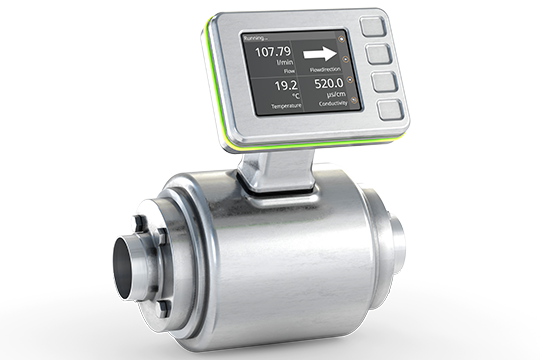
The SMF flowmeter, a standout innovation from ifm, lies at the heart of modern automated filtration systems. It’s a multi-parameter sensor tailored for the food, beverage, and wine industries, offering all-in-one monitoring of flow, temperature and conductivity.
Equipped with IO-Link technology, it can be integrated with digital control systems, allowing for remote monitoring and diagnostics.
The SMF’s ability to deliver comprehensive, real-time monitoring of multiple parameters from a single device – without the need to integrate additional sensors – sets it apart.
“Fewer sensors mean lower installation costs and reduced complexity,” added Blackeby.
The SMF advantage
The SMF makes critical data easily accessible via its local display providing instant feedback and greater visibility of the filtration process.
This real-time visibility allows operators to make immediate adjustments, maintaining optimal filtration performance without relying on manual checks. It also allows operators to identify and address system inefficiencies, leading to reduced waste and more efficiency consumption of resources.
The result is improved process stability and product quality, as well as more sustainable operations.
With its fully welded stainless-steel housing, leak-free connections and IP69K protection rating, the SMF is built to withstand the harsh realities of winery environments – including high-pressure filtration cycles, aggressive cleaning regimes, and temperatures up to 150°C.
Its intuitive app-based menu and the wide range of seals and adapters available make it easy to install and integrate – even for those just starting out with automation.
For more sophisticated operations, data can be logged, stored and downloaded for in-depth analysis, tracking trends or meeting compliance requirements.
“This versatility empowers winemakers at any stage of their automation journey to gain greater process insight and control,” explained Blackeby.
“Automated filtration is about more than process control. It offers the precision and reliability needed to safeguarding wine quality and longevity, reducing risk in today’s challenging market. Wineries that invest in smarter automation and devices like the SMF gain a measurable edge.”