In the fast-paced world of Australian fresh produce, the difference between a profitable season and a break-even one often comes down to what you’re giving away for free.
For years, many packers have stuck to the Minimum Weight System, ensuring every single punnet, bag, or carton is at or above the weight on the label. While this keeps you safe from the ‘weight police’, it forces you to overfill just to be certain.
Across a high-volume line, that’s thousands of dollars of produce walking out the door unpaid for.
AQS: the smarter alternative
Introduced to provide a fairer playing field for high-speed packers, the Average Quantity System (AQS) is a nationally recognised standard governed by the National Measurement Institute (NMI).
Instead of requiring every individual pack to meet the target, AQS looks at the batch average.
The three main rules of AQS:
- The Average Rule: The average net weight of a batch must equal or exceed the weight marked on the label.
- The T1 Rule: Some packages can be below the nominal quantity down to the T1 limit, and a small, specified number of ‘non-standard’ packages can fall between the T1 and T2 values.
- The T2 Rule: No package can be underweight by more than twice the Tolerable Deficiency.
Transitioning to AQS isn't just about regulatory compliance; it's a strategic move for your bottom line, and the most effective way to manage AQS is through an AQS-compatible inline checkweigher.
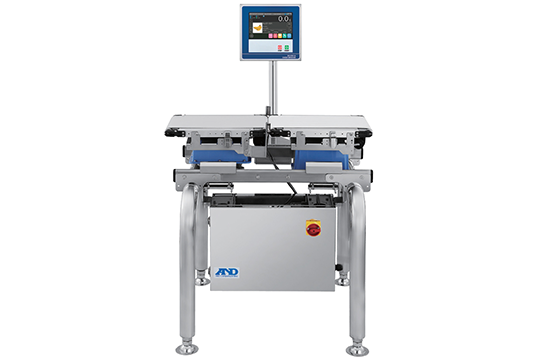
Modern systems, like the AD4961 Series, available through A&D Australasia, don't just kick off outliers; they calculate the running average of your entire batch in real-time.
Benefits of AQS
Drastically reduced giveaway: By packing to an average rather than a minimum, you can shift your target weight closer to the label weight, instantly recovering product that was previously ‘given away’.
Reduced rejects/rework/waste: Less handling of fresh produce equals better quality and reduced wastage. Running based on Average Weight dramatically reduces product rejections.
Global market acceptance: The small ‘e’ mark you see on labels signifies Average Weight compliance. This is an international standard, making it significantly easier to export your produce to Europe, NZ and other markets that recognise Average Weight.
Audit-ready confidence: Moving to AQS encourages the use of automated data collection, meaning you have a digital ‘paper trail’ for NMI inspectors, proving your due diligence without the manual paperwork.