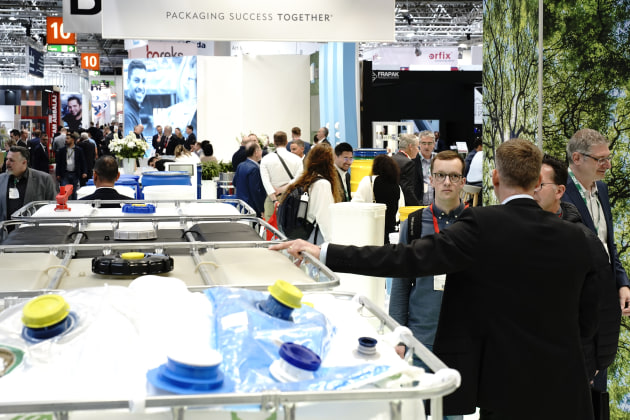
Materials innovation will take strategic focus at interpack 2026, with organisers naming “Innovative Materials” as one of the show’s hot topics and dedicating significant floor space to packaging materials, packaging aids and new material concepts.
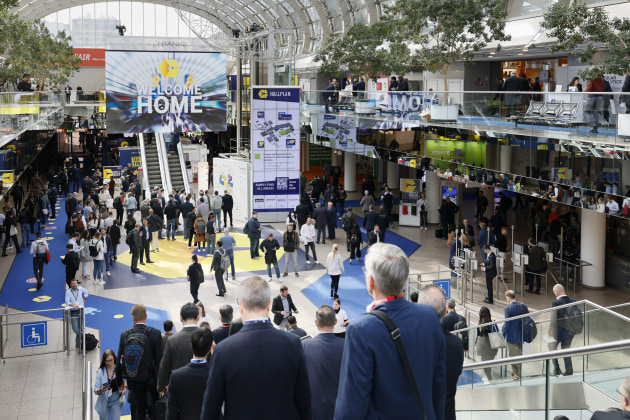
Image: Messe Dusseldorf
Running from 7–13 May in Düsseldorf, the triennial event is expected to host around 2800 exhibitors. More than 1000 of these will showcase packaging solutions, materials and packaging aids across seven halls and floors – bringing together what organisers describe as a globally unique variety of material technologies and applications.
Thomas Dohse, director of interpack, says the decision to spotlight materials reflects their central role in the industry’s transformation.
“The variety of materials and their applications at interpack is unique anywhere in the world,” he says. “By making Innovative Materials our hot topic, we are consciously placing the packaging materials sector at the strategic focus this year and consolidating developments from international markets.”
Plastics remain dominant – but with a sustainability lens
According to 2024 data from VDMA and Euromonitor, flexible and rigid plastic formats account for around 65 per cent of global consumer goods packaging. That dominance will be reflected on the show floor, with a strong presence of suppliers across Halls 9 and 10.
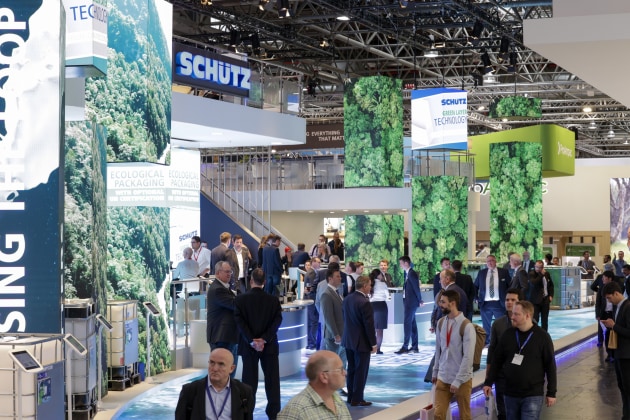
Exhibitors including Sonoco, Taghleef Industries, Jokey and Schütz will present rigid and flexible plastic solutions, including bio-based films and recycled-content formats.
Taghleef Industries, which will be exhibiting in Hall 9, will highlight bio-based and recycled films for flexible packaging and labels, alongside mono-material PP films and downgauged variants designed to improve recyclability and reduce material use.
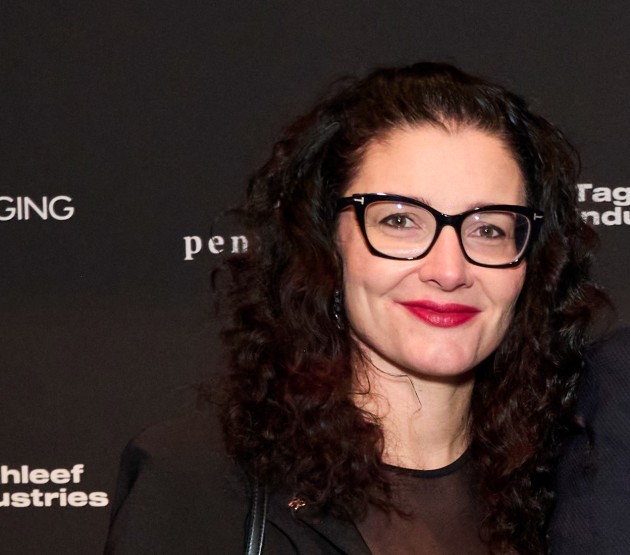
“Monomaterial PP films and material-reduced variants emphasise our focus on recyclability and reduced material usage,” says Ambra Stocco, European Marcom manager & Label lead at Taghleef Industries
Schütz, exhibiting in Hall 10, will focus on plastics solutions for industrial and logistics applications. Veit Enders, member of the board at Schütz, says the company’s 2026 presence will centre on smart packaging concepts that combine economic efficiency with ecological sustainability, aiming to make logistics processes safer and more resource-efficient.
Caps and closures suppliers such as United Caps and Bericap will also be represented, alongside a broad range of packaging aids. Adhesives and adhesive tape specialists including Henkel, H.B. Fuller and Tesa will exhibit in Halls 7 and 10.
Fibre-based formats gain ground
Paper and board-based packaging currently holds around 16 per cent of the global consumer goods market, with forecast growth of approximately eight per cent by 2029.
Hall 8a will host suppliers of paper, cartonboard and corrugated packaging, along with packaging printing specialists. Exhibitors include Metsä Board, Stora Enso, Sappi and Koehler Group.
Labelling and coating technologies will also feature, with companies such as CCL Label and Actega presenting solutions aimed at improving functionality and recyclability.
Metal and glass maintain relevance

Metal packaging – particularly cans and seaming systems – will be showcased in Hall 7a. Companies including Soudronic and Lanico will present complete canning lines and production technologies.
Ruedi Umbricht, COO of Soudronic AG, says demand for complete canning lines is increasing, particularly in the pet food sector, driven by sustainability requirements, CO₂ considerations and strategic value chain expansion. Industry figures place metal packaging’s share at 12 per cent, with forecast growth of 13 per cent in coming years.
Glass packaging, which accounted for eight per cent of retail sales of consumer goods packaging in 2024, is projected to grow by six per cent by 2029. The Federal Association of the German Glass Industry (BV Glas) will serve as a central information point in Hall 10.
Bio-based and alternative materials

Alternative and bio-based materials will feature prominently, particularly in Hall 9. Exhibitors such as NatureWorks and Innovia Films will present developments in bio-based plastics, while fibre-based innovations will also be highlighted in Hall 8a.
Under the “Innovative Materials” banner, the focus will be on material concepts and design approaches that combine functionality, resource efficiency and recyclability – reflecting tightening regulation and rising sustainability expectations globally.
“One of the key tasks for companies in all sectors today is to utilise resources efficiently and to consistently close material flows worldwide,” says Enders. “We view modern technology as the key to mastering these challenges of the circular economy. For us, interpack is the most important platform for discussing these approaches live with our partners.”
Visitors with a particular interest in material innovation can also note 12 May, when “Innovative Materials” will take centre stage at the interpack Spotlight Forum.
For Australian converters, brand owners and machinery suppliers preparing for Düsseldorf, interpack 2026 is shaping up as a key platform to assess the next wave of material technologies – and the commercial realities behind them.