

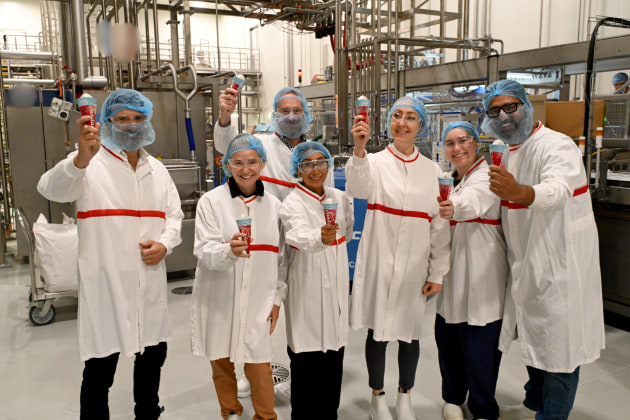
When production began at Bulla’s new ice cream factory in Colac, Victoria, in late 2025, the moment carried more than just operational significance. PKN's stablemate Food & Drink Business was there for the official factory opening, thanks to engineering and automation specialists, Process Partners, which was embedded in the site for the factory’s planning and construction.
For Bulla, the new ice cream facility in Colac signified the largest expansion in its 115-year history and a decisive generational shift in how the family-owned manufacturer designs, builds, and runs large-scale food manufacturing assets.
The greenfield site, adjacent to Bulla’s long-established Forest Street operations, was conceived to solve immediate capacity constraints and lay foundations for the next several decades of growth.
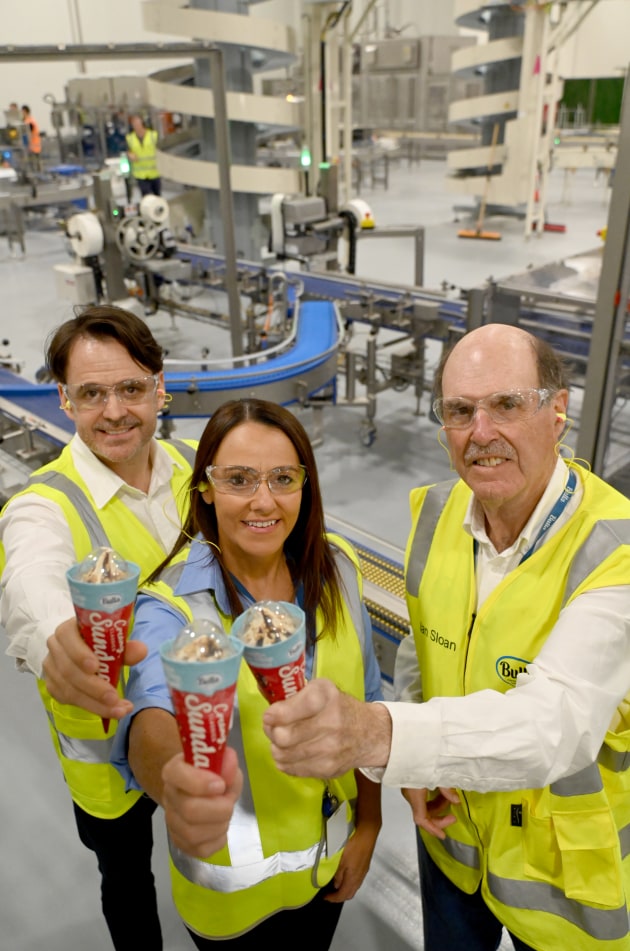
Source: Bulla
It is a factory shaped as much by strategy and discipline as it is by stainless steel, automation, and refrigeration. At 8500 square metres under roof, the build is the largest expansion in the company’s history – and was completed in just 18 months.
Why Colac, why now
Colac has been central to Bulla’s story for more than a century, and the decision to deepen that footprint was deliberate. Speaking at the factory’s official opening, acting CEO and fifth-generation family member, James Downey, said the new site was essential to maintaining competitiveness in a rapidly changing ice cream market.
“Continuing to invest in our sites, our technology and our capability is essential to ensuring Bulla remains competitive and well positioned for the years ahead,” Downey said.
“More importantly, this represents a commitment to maintaining strong regional operations and keeping Colac central to Bulla’s future.”
For Bulla, the decision to build was not optional. Ageing equipment at the existing site, particularly in cones, was nearing end of life, while demand growth was outpacing frozen capacity. Doing nothing would have constrained innovation and left the business exposed.
From concept to concrete
Oversight of the project sat with chief operations officer, Kylie Armstrong. With 32 years at Bulla, Armstrong had worked her way up from the production floor, bringing both operational credibility and institutional memory to the project.
“The goals were very clear,” Armstrong said. “We needed to increase frozen capacity and capability, introduce advanced technology and automation, and improve operational efficiency to strengthen our position in the ice cream industry.”
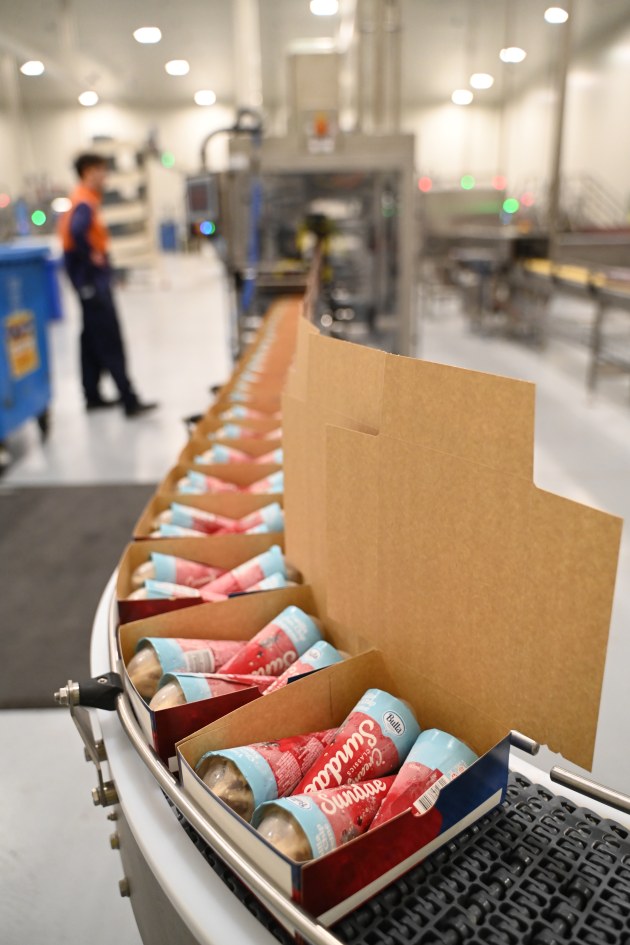
Early planning focused as much on what not to build as what to include. Initial thinking had envisaged three full production lines, but detailed modelling showed that two lines would meet forecast demand for at least five years. The third was designed into the footprint – but not built.
“That decision alone took tens of millions of dollars out of the upfront capital spend,” she said. The result was a facility designed to double capacity over time without expensive retrofits, a classic case of value engineering applied at scale.
Learning globally, building locally
A pivotal step came in mid-2023, when Armstrong and her team spent a month touring ice cream factories across Europe. As members of the International Ice Cream Consortium, they were able to benchmark against some of the most advanced family-owned manufacturers in the world.
“We wanted to learn not just what worked on day one, but how those factories performed after handover – once the suppliers had left,” Armstrong said.
“That shaped how we approached everything from layout to automation and governance.”
The insights fed into a robust business case, presented to the board in September 2023 and backed by a $4.5 million grant under the federal government’s Modern Manufacturing Initiative.
Automation by design
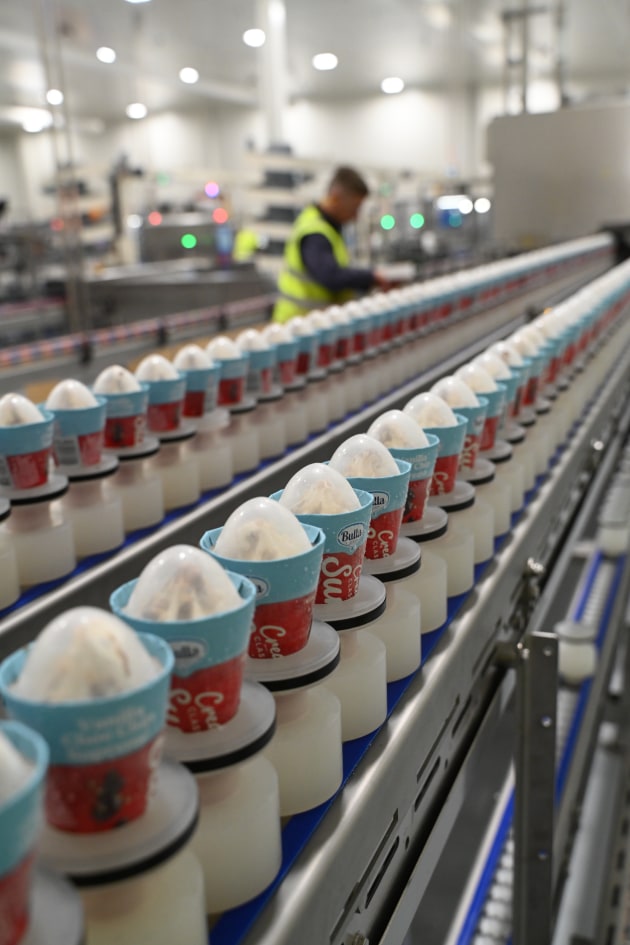
Inside the facility the most striking feature is its automation. Raw material handling – from milk and cream to liquid sugar and industrial-scale chocolate – is largely unmanned, feeding into a highly automated primary processing and packaging system.
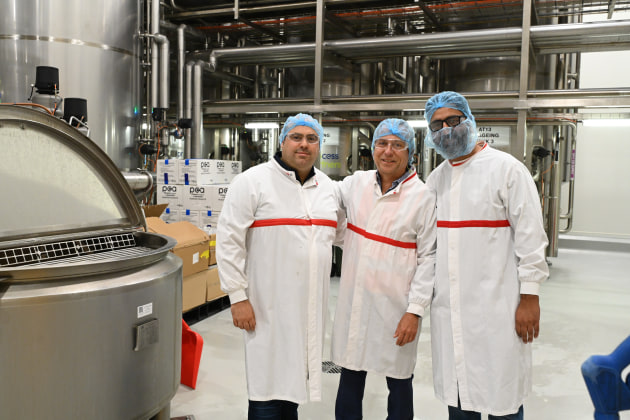
Source: Bulla
The key ice cream forming and packaging equipment was supplied by European ice cream specialists Gram.
Chocolate arrives in large tankers and is pumped straight into dedicated tanks. From there, everything upstream of freezing is automated.
Process Partners director, Peter Rykenberg, said automation was central to the design brief.
“Rather than layering new technology onto legacy systems, the factory was built around streamlined flows reducing complexity while improving throughput.
“The new plant achieves more output with less equipment than Bulla’s older facilities. The processing equipment was designed and manufactured in Australia, with many of the unit systems manufactured in regional Victoria.
“Our designs are based on best practice from Europe that draw upon our relationships with key European technology providers,” Rykenberg said.
Process Partners’ Vince Sposato has been onsite at Bulla throughout the entire build. Sposato added, “We engineered locally all the raw materials handling and primary processing. This project had a high level of digitisation, where throughout construction we could build to a 3D model on site rather than paper drawings and also the ability to manage equipment data and status live on the plant.”
The first commissioned line – dedicated to cones – delivers close to four times the capacity of the line it replaced.
A second line, coming online mid-2026, will produce extruded sticks and ice cream sandwiches, with capacity almost three times that of existing equivalents.
Energy, electrification and efficiency
Energy design was another defining feature. The Colac plant operates without gas, relying instead on an all-electric system supported by a sophisticated heat recovery setup.
“All the heat from our refrigeration motors is recovered and used to heat water for CIP and pasteurisation. I believe it’s the only system of its kind in Australia at this scale,” Armstrong explained.
The system reduces energy costs, improves safety and cuts emissions – increasingly important for a business with a long-term regional footprint.
Combined with future renewable energy options, the site positions Bulla to adapt as energy markets and policy settings evolve.
Building for people, not just machines
Despite the automation, people remain central to the operation. The factory has been designed to support skilled roles, from operators and technicians to engineers and data specialists, with early involvement of operations teams during commissioning to accelerate ramp-up and embed new standard operating procedures.
“Early training and engagement made a huge difference. It meant we could go into production faster and with more confidence,” Armstrong said.
The project also generated construction employment and ongoing roles in Colac, reinforcing the town’s status as a major regional manufacturing hub.
Partners in execution
Critical to delivery was collaboration with Process Partners, which worked across raw material handling, primary processing, filling, packaging and palletising incorporating future-proofing into the site.
Rykenberg said the company’s remit extended beyond installation to long-term planning, ensuring infrastructure could scale without major disruption.
Empty pipe runs, oversized units and spare capacity for a new packaging line are all deliberate choices, reducing future expansion costs.
“This was designed with a 10-year master plan in mind. You spend a little more now to save a lot later,” he said.
Sposato added, “This represents a step change in technical capability for the company. The site’s ability to evolve without costly rebuilds is a rarity in Australian food manufacturing.
“The result is a facility that supports both efficiency and creativity, a combination often seen as mutually exclusive.”
Governance under pressure
“People keep asking how we managed to deliver a project of this size and scale on time and on budget, particularly through a period of rising interest rates and volatile construction costs. Strong governance, open communication and a highly capable team were critical,” Armstrong said.
That discipline extended to stakeholder engagement, with early consultation helping secure council support and trust with neighbours throughout construction.
Beyond capacity, the new plant unlocks product innovation. The flexibility of the second line allows Bulla to expand in extruded formats and respond faster to market trends.
A statement of intent
“Hearn Street represents the next chapter of our family story, positioning us to innovate, create new products and meet the demands of Australian households for many years to come,” Downey said.
In an industry often characterised by incremental upgrades and patchwork solutions, Bulla’s Colac factory has been built not just for today’s volumes, but for the next generation of local manufacturing – quietly efficient, highly automated and deeply rooted in its regional community.
This article first appeared in the Q1 2026 edition of Food & Drink Business magazine.


