



Adelaide design agency Black Squid Design worked with Whistle Blower Tea Co. to find a way for its packs to shout (or whistle) from the shelf.
The cardboard tea pack is digitally printed and foil-stamped and reflects the company's values of honesty, quality and sustainability.
The growing Adelaide company wanted to reposition the brand, starting with a more contemporary logo and retail packaging.
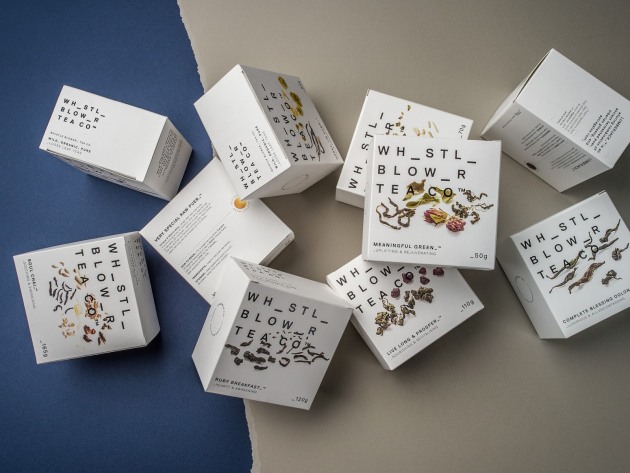
"Taking inspiration from whistleblowers, code-breaking, redacted documents and data leaks, we trialled many combinations of missing letters to achieve the most readable outcome, with the brain naturally filling in the gaps in the logo," creative director Derek Butler said.
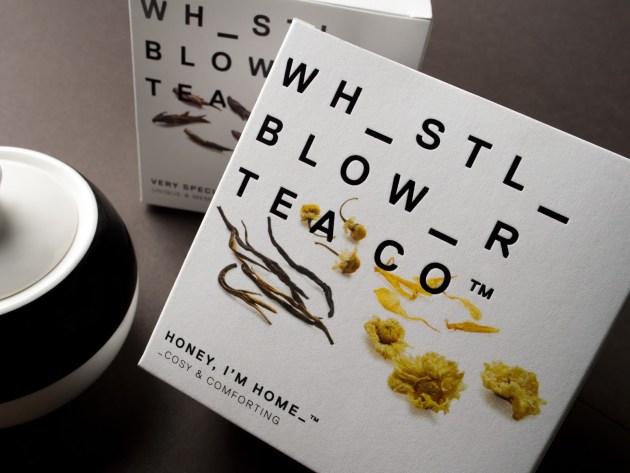
"A clean and minimal approach is employed across the brand and packaging, with a strong, commanding logo and a bold photographic style showing each individual ingredient in detail.
"In doing this, the brand strives to communicate the voice of the company as being open, honest and direct with the consumer."
What's unique?
To back up this ideology, sustainable materials were sought out wherever possible, with a compostable internal bag and 100 per cent recyclable carton, label and print collateral.
The logo was applied to front of pack as a large foil stamp to contrast the natural complexity of the photographed ingredients.


