


Sparkling water brand SodaStream has rolled out a series of limited edition bottles in celebration of Pride Month.
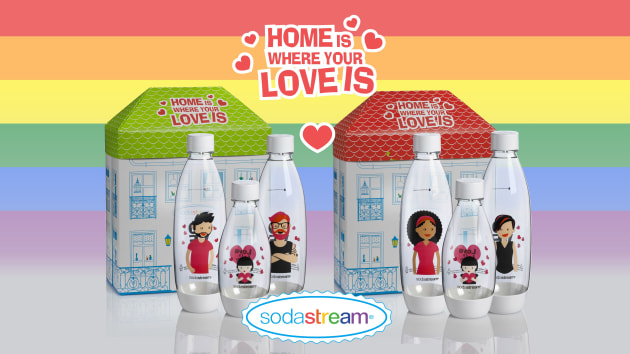
The 'Love is Love' bottles portray same-sex families by including two 'parent' one-litre bottles and one 'child' half-litre bottles imprinted with depictions of family characters from an accompanying animated video.
SodaStream CEO Daniel Birnbaum said the company was committed to forging and celebrating bonds across all nationalities, religions and sexual orientations.
"We hope this campaign will inspire communication and help us all join together to spread a message of love,” he said.
The home-shaped package has been designed to convey the message that “home is where your love is”.
The video, found here, depicts a man and woman spending an ordinary day in the park with two small girls, playing on swings and sharing ice cream cones.
Viewers see the two adults comforting one of the children who fell down. The camera then shows all four characters returning home. The man and woman eventually part ways to two separate houses and embrace their respective spouses, revealing the adults are actually two same-sex couples with one child each.
The limited-edition bottles are sold exclusively online and retail for $24.99.


