UPM Raflatac has expands its labelling product portfolio with the release of its OptiCut solution, which comes complete with in-house developed adhesive technology specific for each of the primary direct thermal linerless end-use environments – from retail and logistics to service and takeaway.
The OptiCut prevents paper jamming and provides excellent adhesion with minimal adhesive build-up in a wide variety of applications – from rough surfaces to sub-zero temperatures.
It minimises service time and offers customers a linerless product with maximum uptime of printer applications, fewer reel changes, and a crisp barcode on the package.
“Our innovative and sustainable solution is the optimal choice when you are looking for clean cutting performance on the printer, combined with excellent adhesion on the package,” said Mauri Suomela, senior vice-president for paper laminates, UPM Raflatac.
Direct Thermal (DT) linerless labelling is an efficient and sustainable alternative to traditional label stock as it brings up to a 40 per cent reduction in material usage.
Driven by sustainability trends and the need for increased efficiency, linerless has quickly gained ground alongside traditional labelling technologies.
Boosted by growing demand in end-uses, such as grocery labelling, logistics and quick service restaurants, UPM claims the DT linerless market has seen approximately 15 per cent year-on-year growth in recent years.
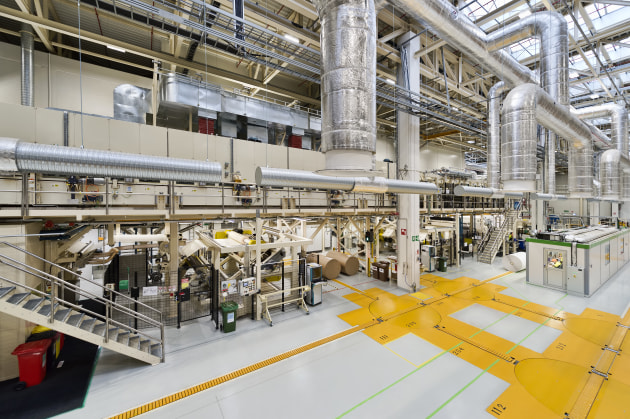
To strengthen its position in the fast-growing linerless labelstock market, UPM is scaling up its production capacity and building a new production line is Nowa Wies, Poland.
The investment includes a new linerless coating line and increased slitting and packing capacity, thereby increasing the company’s DT linerless annual production capacity by 100 million metre squared.
The latest production line is expected to be operational at the end of 2021.