


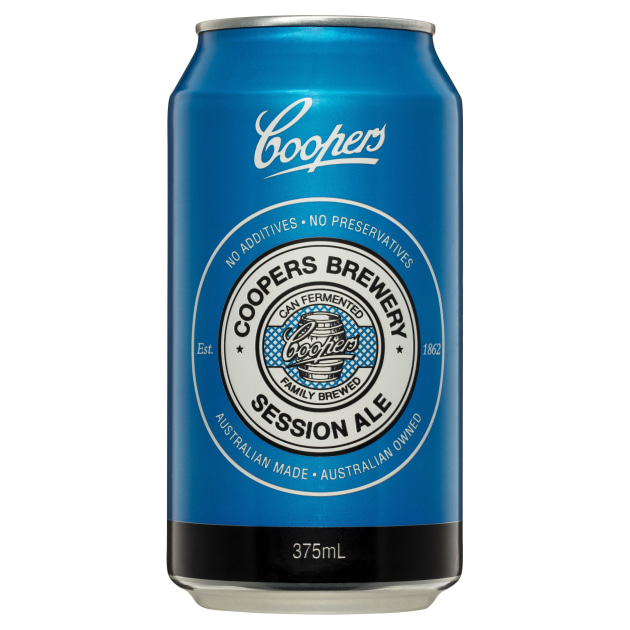
In response to consumer demand for its newest keg beer to be packaged, Coopers is making its summer style Sessions Ale available in cans and bottles.
In late 2017 Coopers launched the first addition to its family of ales in 14 years. Sessions Ale started out in kegs for the hotel trade. But within a few months since its introduction, it’s the number two selling keg beer in the Coopers stable, so a packaged format is the obvious next step.
Coopers’ sales and marketing director Cam Pearce said that by January this year, Session Ale had become Coopers’ second largest selling keg beer after Coopers Original Pale Ale and ahead of Sparkling Ale and Mild Ale.
“It’s been a tremendous response,” he said.
“As Session Ale has become better known, we have been inundated with customer requests for it to be released in a packaged format.
“As a result we have started production of Session Ale in cans and bottles. Stocks should be widely available at bottle shops and liquor stores across Australia from March 5.”
Pearce said Session Ale provided an exciting new flavour profile for the Coopers’ range.
“It’s an excellent example of innovation by Coopers’ brewers and as a beer, it is fully on trend,” he said.
“We believe Session Ale will quickly establish itself as one of our most popular beers.”
Mr Pearce said that because Session Ale was brewed using Coopers’ traditional secondary fermentation process, it would have the same style of label as Coopers’ other ales but with its own distinctive blue rondel (ale label).
Session Ale is brewed using Galaxy and Melba hop varieties that produce a fruity, easy-drinking summer style beer, with a golden straw colour and an alcohol level of 4.2%.


