


New Zealand supermarket retailer New World has started trialling a returnable container system in two of its stores in September, supporting owner Foodstuffs’ HereforNZ commitments to reducing single-use packaging and landfill waste.
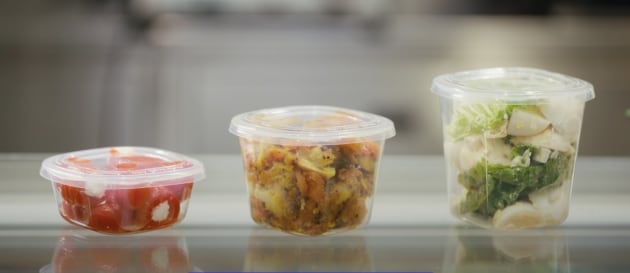
The two-year trial is called RePlay and is developed in partnership with Bonson Packaging and co-funded by the Ministry for the Environment. It allows customers to buy deli goods in reusable polypropylene containers using a simple tap of their phone or debit card.
There is no upfront cost to participate, only a temporary $3 hold per container, released when containers are returned to a smart bin in store within four weeks. Late returns incur a $3 replacement fee, with a partial $1 refund if returned within six months.
For example, a customer buys fresh salad from the deli. The deli team selects a RePlay container, scans its unique QR code, and fills it with salad. The customer taps their card or phone to ‘borrow’ the container, which places a temporary hold of $3. The customer pays for the salad at the checkout with other groceries as usual. Once finished, the customer rinses and returns the container to the RePlay smart bin. The bin reads the QR code and releases the hold. The instore team then sanitises the container for the next customer.
According to Bonson Packaging, polypropylene was chosen after comparing PET, glass, aluminium, steel, and plant-based alternatives, as it balances durability, food safety, functionality, environmental performance, regulatory compliance, customer appeal and cost. In-house testing indicates RePlay containers may be used for up to 50 cycles, with actual reuse rates to be determined during the trial.
Debra Goulding, sustainable packaging manager at Foodstuffs, said, “The trial is about seeing how returnable packaging works in supermarkets at scale. We’ve already learned a lot from getting rid of single-use plastic bags and know that even small changes can take time to be more widely adopted. This trial is about finding simple, practical ways to help customers make a difference.”
She added, “We know there’s often a gap between what people say they’ll do and what they actually do. This trial is about understanding how a returnable system can help customers bridge that gap and whether returnable containers can become the new normal in supermarkets.”
Rodney Bennett, general manager of Bonson Packaging, said, “After two years of R&D, we’re very excited to trial the RePlay Returnable system in New World supermarkets. By working alongside local partners Circularity, Again Again, Anew and New World, we have co-designed a circular system right here in Aotearoa, New Zealand.”
He added, “While other brands and retailers have trialled reuse initiatives, none have yet cracked the challenge of making it work at scale. We believe RePlay has real potential because it’s built on a circular business model – packaging as a service using food-grade, durable polypropylene.”
The company said that while the RePlay system launches in New Zealand, Australia is on its radar, with potential development and launches likely in Q1–Q2 2026.
To watch how RePlay works, click here.


