



Coca-Cola has released a video which shows how consumers can turn its 12-can fridge pack into a virtual reality viewer for their smartphone.
Drawing primarily from Google Cardboard specs, the viewer uses only recycled cardboard from the box.
All that's needed is the packaging, a phone, and scissors, although at this stage Coca-Cola has not provided the required plastic lenses as it is still a prototype.
The company states that apps and games developed for Google Cardboard will work on the Coke VR viewer.
Google’s Cardboard platform, an open spec for virtual reality viewers powered by smartphones, has over 10 products from various companies ranging from low-cost for all cardboard versions to those resembling a finished consumer product like Mattel’s revamped View-Master.
Google recently announced that over five million units of cardboard viewers had been shipped as apps for the platform passed the 1000 mark on the Google Play store.
McDonald's has also rolled out a trial in Sweden which sees its iconic Happy Meal box transformed into a VR headset.
The brand has dubbed its creation Happy Goggles, with the trial launched alongside a ski-themed VR game named Slope Stars.
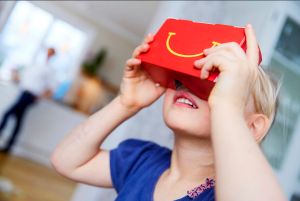
McDonald's will release 3,500 of the headsets in 14 restaurants in Sweden over the weekends of 5 and 12 March.
The strategy for the trial was developed by DDB Stockholm, along with the design and packaging, and North Kingdom Stockholm was responsible for the game.
Watch how the McDonald's headset is created below:


