


At the Sustainable Packaging Summit in Amsterdam this week, the opportunities and challenges inherent in adopting reuse systems formed the focus of the Reuse Consortiums panel, moderated by Lindy Hughson, PKN publisher and president of the International Packaging Press Organisation.
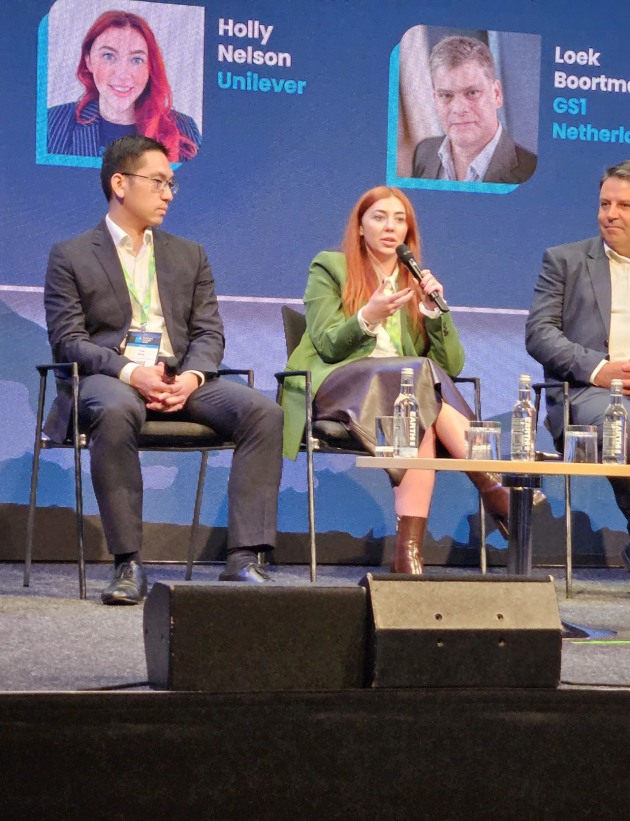
The panel of industry experts comprised Emmanuelle Bautista from Citeo, Amy Larkin from PR3-RESOLVE, Feng Wang from UN Environment Programme (UNEP), Loek Boortman from GS1 Netherlands, Noam Assael from Avery Dennison, and Holly Nelson from Unilever.
Key takeouts were summarised by the Packaging Europe team as follows:
- One of the major barriers to reuse in individual regions is the lack of a clear legal framework.
- Lack of consumer engagement is another barrier. Unilever has conducted around 50 pilots which 'universally' found that, regardless of region, finding a way to actively incentivise the consumer is vital.
- Standardisation of reuse systems and definitions (including labelling) is also key - not least when it comes to sharing data to make efficiency improvements. Lack of data is currently still a huge barrier to scaling reuse. ( There is also the financial aspect, of course: 'The more harmonised the rules of the road are, the more money you can make.')
- Examples of successful Unilever pilots: OMO brand in Latin America; project with the waste bank community in Indonesia working as a consortium. Each pilot has to be tailored to the needs of individual markets and its consumers.
- Learnings from less successful Unilever pilots: consumers were less inclined to opt for super-concentrated solutions; also, with return-to-store, what works best is a multi-brand approach.
- Calls to action: instead of trying to roll out every kind of model, go for some quick wins (e.g. B2B); brands must collaborate moving forward (e.g. in-store multi-brand return systems); both public and private financing need to be stepped up.


