


Bupa Optical & Hearing has launched a recycling initiative in partnership with Opticycle, enabling Australians to recycle old glasses, contact lenses, and contact lens packaging at their stores nationwide.
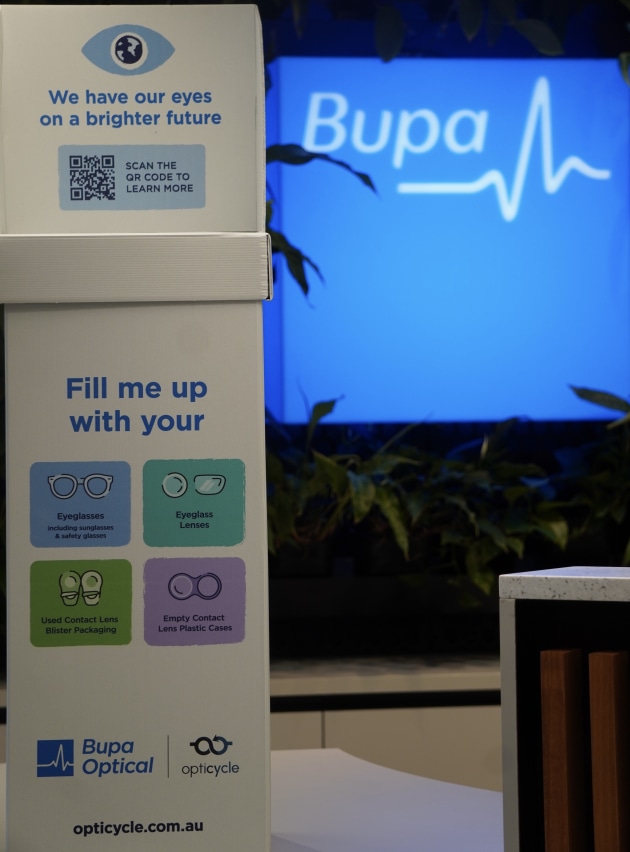
The goal is to reduce waste from optical products, given that between 250 and 500 million contact lens packages end up in Australian landfills each year. The collected materials will be passed on to local Australian companies to be reused as raw materials in new products.
Liz Curran, managing director of health services at Bupa, said the initiative offers a solution for people unsure of how to dispose of their old optical products.
“Many Australians don’t know what to do with their old glasses and contact lenses, which end up in landfill. This is problematic when considering that many contact lenses take 500 years to decompose,” Curran said.
People can drop off their used optical products at any of Bupa Optical & Hearing’s 49 stores across Australia during regular opening hours, without needing an appointment or being an existing customer. Opticycle estimates that it has saved over 41,000kg of materials and 210m³ of landfill space to date.
Curran mentioned that the initiative supports Bupa’s broader sustainability strategy.
“This forms part of our ambition to become a net-zero business by 2040 as we continue working to reduce our impact on the planet, focusing on waste reduction and shaping a circular healthcare system,” she said.
Bupa has also recently worked with Health Care Without Harm on a global report outlining principles for reducing reliance on single-use items in healthcare while maintaining patient care standards.


