


The Broadford Mill, a leading manufacturer and importer of pasted and specialty boards in Australasia, has introduced an angle board used to protect pallet and carton edges made entirely from recycled paper waste.
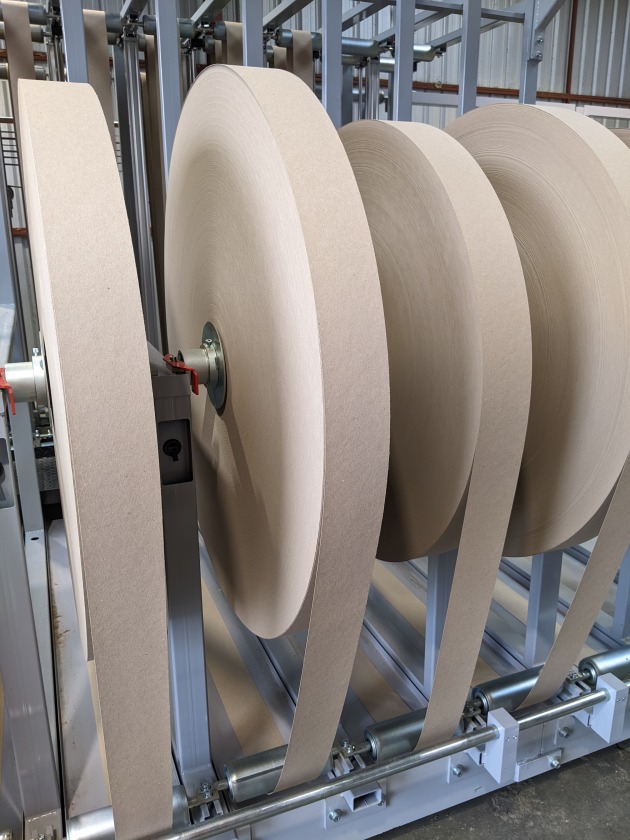
Using waste paper from the company’s own site, as well as from external suppliers, the mill has replaced raw source materials with recycled materials, contributing to waste avoidance and improved processing capacity.
The Broadford Mill received funding from Sustainability Victoria’s Circular Economy Business Support Fund to deliver a recycling production plant to increase the state’s capacity to recycle paper and cardboard waste.
The mill said that it is now the only angle board manufacturer in Victoria and Australia with complete on-site processing capabilities.
The project aligns with The Broadford Mill’s vision of producing sustainable, recycled and recyclable products in a cost-effective manner, and the mill’s use of downgrade damaged stock and waste ensures that waste materials are diverted from landfill.
“The project is economically viable thanks to Sustainable Victoria’s contribution, and has room to grow and expand,” said David Buttle, general manager of The Broadford Mill.
“To meet the increased demand generated by the angle board line, we have made significant investment in expanding our operations. This includes the acquisition of a third rewinder machine, the construction of a new reel store, and the extension of existing angle board sheds.
“These strategic measures will substantially enhance our production capacity, enabling the organisation to effectively cater to the growing market demands.”
The Broadford Mill said the locally made angle board product has been well-received by the market, with positive feedback on its quality.


