


Artificial intelligence is moving beyond pilot projects into practical packaging and processing applications, positioning the technology as a key theme at Pack Expo International 2026.
Lower costs, expanded functionality and greater confidence in artificial intelligence are accelerating its adoption by consumer packaged goods companies and packaging machinery manufacturers, according to new research from PMMI, The Association for Packaging and Processing Technologies.
The findings suggest AI will feature prominently across the Pack Expo International show floor when the event returns to McCormick Place in Chicago from 18–21 October.
PMMI’s report, Building an AI Advantage in Packaging Equipment, updates research published in 2024 and draws on interviews with AI vendors, packaging machinery manufacturers and consumer packaged goods companies.
It identifies declining costs and greater accessibility as important drivers of adoption, alongside stronger awareness of AI’s capabilities and a shift beyond isolated pilot projects. Acceptance is also growing among frontline employees as they experience tangible benefits from the technology, the report says.
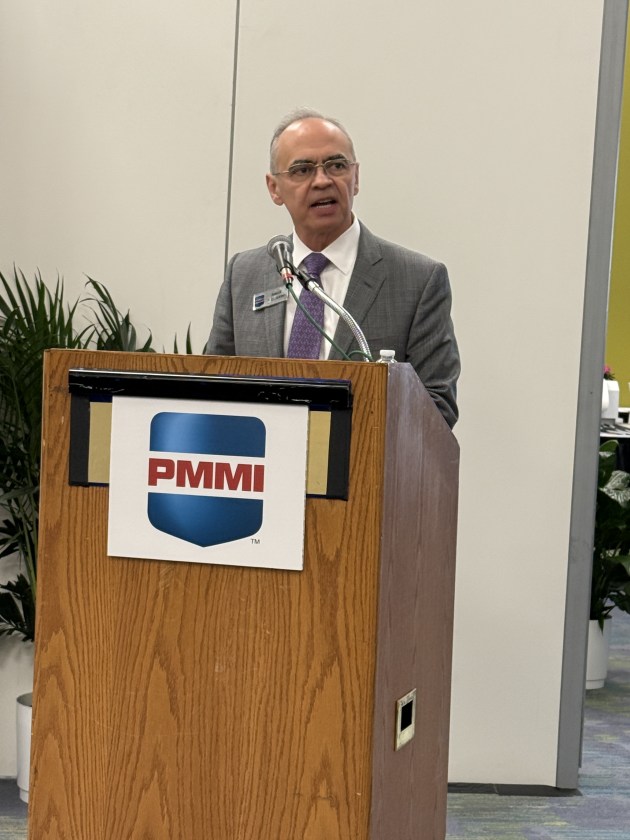
“Manufacturers across the packaging value chain are recognizing that AI can help address some of their most pressing challenges, from workforce knowledge gaps to operational efficiency. What we’re seeing now is a shift from isolated pilots toward broader adoption, where AI supports smarter, more connected production environments,” said Jorge Izquierdo, vice president, market development at PMMI.
The report groups the most common applications into five categories. Knowledge transfer and machine vision are currently gaining the most momentum, followed by predictive maintenance, regulation and compliance, and data transparency.
This points to an expanding role for AI in production environments – from capturing the expertise of experienced operators and improving automated inspection to anticipating equipment failures, supporting compliance and extracting operational insights from plant data.
A global product line manager at an industrial technology and automation company, interviewed for the report, predicts that the next stage will involve a move from individual applications to coordinated, plant-wide systems.
“In the next five years, the trajectory will move from isolated optimization to coordinated orchestration. Plant-wide systems that dynamically balance throughput, quality, cost, and energy consumption across every production stage will mature from specialized installations to standard capability.”
Significant barriers remain, however. PMMI identifies concerns about AI-generated errors and accountability, along with cybersecurity, return on investment, latency, existing data infrastructure, job security and gaps in operational readiness.
The report notes growing interest, particularly among smaller businesses, in software-as-a-service models that shift a greater share of the technology risk to providers.
PMMI recommends that manufacturers begin by identifying a defined business or product challenge, consulting AI specialists and assessing the readiness of existing systems. Managing organisational change and fostering collaboration across stakeholders are also identified as important elements of a successful AI strategy.
“Artificial intelligence is becoming a practical tool for improving packaging operations, and PACK EXPO International offers a unique opportunity for companies to see these innovations in action and explore how they can be applied on the plant floor,” Izquierdo said.
PACK EXPO International is expected to bring together 2600 exhibitors spanning packaging and processing machinery, materials and technology. The event will provide an opportunity to assess how far AI has progressed from an emerging concept to a practical industrial tool – and where gaps between its promise and implementation remain. PKN will attend the show, looking for practical examples of how the technology is being integrated into packaging and processing operations.


