


J. Walter Thompson has been working out what makes people tick (read: buy stuff) since 1864 and is now “the world's best-known marketing communications brand".
JWTIntelligence has been exploring key trends since 2005. So this year, to mark its decade of understanding, it published a report of the most compelling macro trends identified since it began its annual forecasts.
The report also includes fresh data from key Asian markets, including Australia, China, India, Japan, and Thailand.
JWT’s 10 Years of 10 Trends report identifies:
Buying the Experience (10 Trends for 2007)
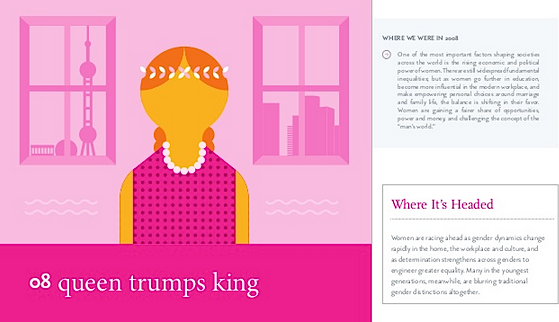
Queen Trumps King (10 Trends for 2008)
Cooperative Consumption (10 Trends for 2008)
The Mobile Device as the Everything Hub (10 Trends for 2009)
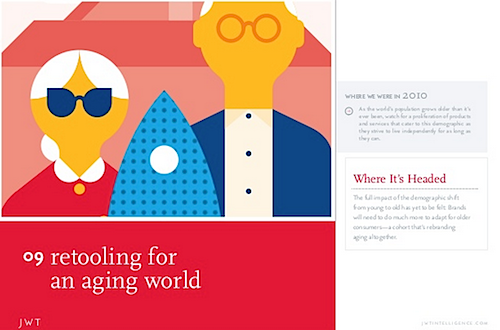
Retooling for an Aging World (10 Trends for 2010)
De-teching (10 Trends for 2011)
Food as the New Eco-Issue (10 Trends for 2012)
Predictive Personalization (10 Trends for 2013)
Everything Is Retail (10 Trends for 2013)
Going Private in Public (10 Trends for 2013)
View the 10 Years of 10 Trends executive summary slide show here.
That got PKN wondering what might lie behind some of the current trends and what they might mean to the packaging industry here. So we asked Andrew McCowan, head of insights, JWT Sydney.
PKN: Is Australia a trend follower?
McCowan: The main driver of these trends is developments in key emerging markets where consumers are being liberated by new flexibility and breadth of choices thanks to social and economic change. It is change that is being accelerated by the impact of mobile digital technology, most dramatically among the Millenials cohort of 18 – 34yr olds. The forces driving these trends have a different impact in Australia and other developed economies, and when combined with local dynamics the results can be somewhat different and unique in our country. This is particularly evident in the two trends that standout as being more advanced here in Australia. They are: “Food is the new eco issue” and “Mobile device as an everything hub”. The other 8 trends are all in evidence in Australia – but not on the leading edge of the trend worldwide.
"Food is the new eco issue" is a key trend in which the Australian market is notably advanced.
Australian consumers have long been highly sensitive to the quality and sustainability of agriculture, hence the rise in concern over ethical production (free range chickens and eggs, sow stall free pork, grass fed beef, RSPCA approval stamps, etc). Australian consumers have also shown a deep level of trust in the Australian food production system, which hasn't had a food quality scare like many European markets. The net result of this is that Australians are not turning away from meat protein, but we are instead seeing a rise in the mass appeal of lean meat options.
"Mobile device as an everything hub" is the other of the 10 trends that is most advanced in Australia.

Australia is a leading adopter of mobile technology with a very high quality 3G and 4G network enabling high-end functionality – over 8 million of us now have a smart phone, with the numbers continuing to increase rapidly. According to our Trends report, mobile technology isn't changing people's behaviour in Australia at the same level as in many developing markets, but that's because the behaviours have already changed here. For instance, the use of mobile functions in shopping is already an established behaviour among younger adults in Australia, from banking transactions to buying cinema tickets to information-sourcing on mobile Google.
The key local dynamic is Australia's geographic location combined with a relatively small and diffuse population. This dynamic poses challenges in the cost and practical process of deploying new digital marketing technologies, compared to other markets where the investment can be made against bigger consumer markets in smaller areas. This is one of the key practical reasons why Australia isn’t on the leading edge of more of the trends.
PKN: A few years ago, older people were considered to be arrogant, difficult and tech-stupid. How much does Australia need to Retool for an Ageing World in 2015?
McCowan: The key cohort which is driving the need to retool for an ageing world is Baby Boomers. The sheer size of this cohort means the demographics of the ageing population are changing dramatically – and a significant consumer market for products and services tailored for them has been created. In Australia, Boomers hold 40% of the nation’s wealth. This group has different expectations of ageing and how they will spend their older years, and these expectations have been well tracked by trends analysts for years as Baby Boomers have moved through different life stages and faced new challenges at each stage. At the moment, they’re not feeling well represented in the media. In fact, our research showed that a staggering 94% of them feel misrepresented in the media. This problem also occurs in face to face dealings between older consumers and brands. A study into older consumers and technology companies around the world by AVG Technologies showed that older consumers feel patronised (53%) and talked down to when they need help (56%) when dealing with technology companies. This dissatisfaction was far higher in Australia than in the other 8 countries they surveyed.
The key to retooling for this ageing world will be products and services that enable them to be active and fully engaged in their life interests despite the physical changes and challenges that make that engagement and involvement harder to maintain.
JWT research into Boomers here in Australia showed that there are 5 contradictions that are core to understanding what drives Boomers. They are:
- They want to feel young, but they don’t want to feel compared to the young. They embrace their own experiences – they “have lived” and have wisdom and intelligence to offer in life, but they also embrace the attitudes and behaviours of a “forever young” mindset.
- They are a generation with big dreams and bigger anxieties. They are optimists – with 65% of them saying their best years are in front of them, but they are heading into a time of life that is posing questions that they aren’t ready to answer.
- They want brands to identify them and connect with them, but not as an “age-group”. Talking to Boomers means talking to the spirit of freedom they embrace, without holding up a mirror to their lives.
- They thrive on inspiration but crave facts. Boomers lean into brands that inspire them but this needs to go hand in hand with the proof behind the inspiring story.
- They have been known as the “me, me, me” generation, but are now very much more about “we, we we” – they are showing a strong interest in new connections in their community where they can share their life experience – with 58% planning to volunteer at a charity or non-profit organisation
Because of these contradictions, marketing to Boomers needs to be handled with care. Clearly, so far marketers haven’t connected to this audience effectively – and as more Boomers age, the pressure will increase to get it right. That’s why the retooling to connect with this ageing cohort is inevitable, and those brands that make the right connect first, will be well set to ride this trend for the coming decade.
PKN: "Superlife" food - food that turns people into superhumans - is definitely hot right now. Will superfoods take over from sustainable food and how will they maintain credibility?

McCowan: It is not likely that superfoods will take over from sustainable food. However there will continue to be pressure on people to get more nourishment and health value from their everyday food choices. As such, the so called "superfoods" may provide an easy and appealing way to do that. The expectation will be that such foods will be delivered in a sustainable manner, with the claims made for such foods validated as being accurate. In other words, there is likely to be high pressure for endorsement and science to back up superfood claims.
PKN: Is there anything worse in packaging than an old fad that refuses to 'die' or gets done to death?
McCowan: Fads are inherently short term in nature, and the 10 trends we review in our global report are about the drivers that underpin the fads that come and go in marketing. Advertising and packaging messages need to be mindful of underlying economic and social drivers that create fads, to ensure we are connecting into a sustainable and ongoing consumer dynamic. In other words if you connect into the consumer dynamic (e.g.: people using tech to ensure they are contactable 24/7), it will continue to be relevant – while the short term "fad" (e.g. use of instant messaging vs. email, vs. text messaging) may not be. The dynamic remains the same, while fads come and go. If we rely too heavily on a fad it can be out of date quickly, but if we connect into the underlying dynamic it will be relevant and contemporary for longer.
PKN: De-teching? Trend or wish?

McCowan: De-teching is a counter-trend to the overwhelming impact of tech on the way many people are living their lives. It's a choice that some people make, and so represents a niche opportunity for brands. It's unlikely to become a general mass movement, but there can be opportunities for brands to facilitate how people can choose to de-tech for a moment and enjoy old-fashioned "analogue" experiences with simple ideas. These could include mobile phone free conversation areas in a coffee shop, or a kids’ weekend camp free of computer games and the new “digital detox” resorts emerging in remote wildernesses and islands which ban the use of mobile phones or laptops outside a guests room (or are so remote that mobile networks are unavailable), to aid general de-stressing and allow guests to immerse into the experience of the destination and become more relaxed.


