Tetra Pak has joined hunger relief organisation Foodbank to supply long life UHT milk to people in need.
Tetra Pak is the latest company to have joined the Foodbank food relief organisation, a national, non-denominational, not-for-profit organisation which collects surplus and donated food and grocery products from producers, manufacturers, distributors and retailers and distributes them to charities and community groups.
These supplies are then disseminated to people in need in the form of meals, grocery hampers and emergency relief packages.
“We want welfare agencies to be able to rely on us for all the key essentials they need to provide balanced and nutritious meals to people in need,” Foodbank chief executive, John Webster, said.
“Milk is consistently at the top of their shopping list.”
Since 2011, prior to the latest long-life milk program being established, the Australian Dairy Industry united to provide Foodbank with one million litres of chilled milk annually.
The new long life milk allows milk to be included in emergency food hampers and distributed to charities without the need for refrigeration, which is particularly important in remote and regional areas.
As part of Tetra Pak’s involvement, its employees volunteer at Foodbank’s warehouses on a number of days during the year. This program has already started and it will continue throughout 2013.
The managing director of Tetra Pak Oceania, Noel Ayre, said that the partnership with Foodbank made a lot of sense for his company.
“One can’t learn about Foodbank’s work without wanting to play a part in helping them to achieve their goal of eliminating hunger,” he said
“Tetra Pak pioneered aseptic packaging in the 1960s making long life milk possible, and it’s also perfect for Foodbank’s work,” Ayre said.
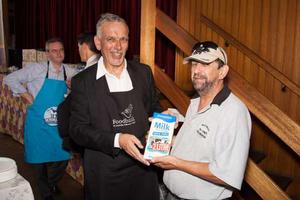 Tetra Pak Oceania managing director Noel Ayre takes a stint packing foods at the Foodbank warehouse.



