A team effort by bioplastics producer Innovia Films and global lactic acids producer Corbion Purace has succeeded in developing a poly lactic acid (PLA) film that is both transparent and able to withstand high temperatures.
To date, existing PLA biopolymers have had only limited heat resistance, meaning that brand owners and packaging converters have been limited to oil-based plastics for many applications.
The raw materials used in the new film are sourced from GMO free, renewable feedstocks such as sugarcane.
The resulting polymers have been proven to withstand boiling water, and have achieved performance characteristics to rival their oil-based counterparts.
Innovia says the latest development opens up new opportunities for both food and non-food packaging and many industrial applications.
In food packaging, for example, the film can be used to make pouches such as juice or soup packs.
Possible non-food applications could include release liners for pressure-sensitive products, window films and protective films for smartphone screens. Many of these applications require thermal stability during processing or use.
Innovia says that early product development on the new film has shown that the new product produces considerably less shrinkage at high temperatures compared to existing PLA films and offers properties comparable to oil-based PET films.
“Dimensional stability, particularly at high temperatures is a real weakness in bio-films,” product development manager at Innovia, Steve Langstaff, said.
“This new development will fill a performance gap in the market and is a great opportunity for both Innovia and Corbion Purac.”
The two companies will join forces again later this month at the K show for plastics and rubber products in Düsseldorf, Germany, to showcase a range of prototype products using the transparent PLA film.
“This will provide brandowners with the opportunity to select a more sustainable alternative for their film applications," senior vice-president for bioplastics at Corbion Purac, Joroen Jonker, said.
“By pooling our expertise and combining our research strengths, we can show that we can develop a bio-based performance film to rival traditional, oil-based standards.”
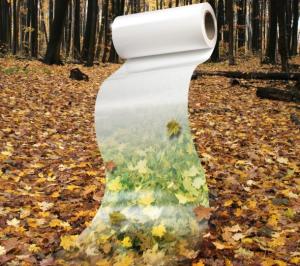 Innovia's and Corbion Purace's new poly lactic acid (PLA) film is a bio-based film able to withstand high temperatures in food packaging and processing.



