Australian beer can collectors have given their highest possible seal of approval for a commemorative beer can produced by Coopers Brewery for last year's Supercheap Auto Bathurst 1000 V8 Supercars event.
The special Coopers Mild Ale can, which was released to highlight the 50th year of the iconic Bathurst endurance race, has been named the Australian Beer Can of the Year for 2012 by the Australian Beer Can Collectors Association.
The association's South Australia-Northern Territory president, Colin Pearce, said the award had been overwhelmingly endorsed in a ballot of its members.
“A total of 92 per cent of members voted for the Bathurst can,” he said. “That was one of the biggest votes in favour of a can on record.”
The association has conducted its awards each year since 1979, choosing their pick of new beer cans put on the market between December one year and November the following year.
The Coopers Bathurst can was offered for sale around Australia in the lead-up to and during the Bathurst weekend on 4-7 October last year.
Coopers chairman, Glenn Cooper, said the Bathurst can was a one-off and would not be repeated this year.
“Because the 50th year of racing at Bathurst coincided with our 150th anniversary, we decided it was appropriate to release a special can for that event,” he said.
“It’s also a strong recognition of the efforts of the can’s designers, Adelaide firm On-Creative.”
Pearce said the last time Coopers won the Can of Year award was in 2001 for a special Grand Prix can. In 2010, Coopers was runner up in the award for its 355 ml Coopers Clear can.
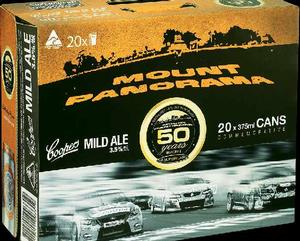 The special commemorative can produced by Coopers Brewery for last year's Supercheap Auto Bathurst 1000 V8 Supercars event has been named can of the year by the country's beer can collectors.



