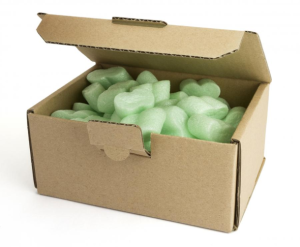
• Protective Packaging refers to the use of packaging materials which safeguard and shield a product from damage.
    Protective Packaging refers to the use of packaging materials which safeguard and shield a product from damage.

Close×

The global protective packaging market was worth $22.25 billion in 2014 and is projected to reach $29.30 billion in 2020, according to a new report.

Online shopping, rising income levels, and urbanisation are among the reasons cited for its 4.7 per cent annual growth rate.

Protective Packaging refers to the use of packaging materials which safeguard and shield a product from damage. It can be used as a primary packaging material or a secondary packaging material, depending upon the products' end use application.
Vendors in this industry provide protective packaging solutions through innovations for end use industries such as automotive, electronics and pharmaceuticals.

According to ResearchAndMarkets’ market trends and forecasts report, the Asia-Pacific region led the protective packaging market with a share of 38 per cent in 2014, and is estimated to grow at an annual rate of seven per cent.

The market is highly consolidated, with its top 11 companies constituting only 20 per cent of market share. The other 80 per cent comprises small, niche players across the globe.

Some of the major vendors mentioned in the report are Automated Packaging Systems, Sonoco, Pregis Corporation and Mold-Rite Plastics.

Food & Drink Business

Dairy goods producer, Summer Land Camels, is gearing up to expand into the US health and wellness market, supported by a crowdfunding campaign conducted via OnMarket.

Tasmanian whisky pioneer, Bill Lark, has been appointed a Member of the Order of Australia (AM) in the 2026 Australia Day Honours List, recognising his extraordinary contribution to the Australian distilling industry and Tasmanian community.

Australia’s beverage market is being reshaped by powerful demographic and behavioural forces that will define demand for decades. At Suntory’s Rituals event in Sydney, demographer Bernard Salt and Suntory Global Spirits Global VP of Insights and Analytics, Jing Mertoglu, outlined a converging story – one that positions Australia and New Zealand as two of the most strategically attractive beverage markets in the developed world.