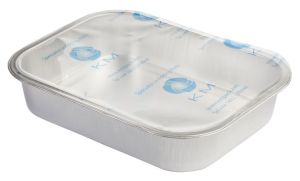
• Sealing both CPet and aluminium foil, the material will help prevent breakage and seal failure, reducing food waste and spoilage.
    Sealing both CPet and aluminium foil, the material will help prevent breakage and seal failure, reducing food waste and spoilage.

Close×

KM Packaging Services has created new lidding film options for aged and healthcare markets.

The European packaging specialist has launched a strong, impact-resistant lidding film named KPeel WF1N, which is 29 or 43 microns thick and dual-ovenable.

Sealing both CPet and aluminium foil, the material will help prevent breakage and seal failure, thus reducing food waste and spoilage.

As well as ensuring a cold peel without sharding, the new film facilitates a stress-free hot peel too – making it particularly suitable for the elderly. It works with catering size packs and family-portioned meals as well.

The film is expected to reduce the number of spoilt or damaged products returned by consumers or retailers, and limit the fines and reputation damage suffered by food manufacturers using inferior packaging.

Many catering companies are still using cardboard lids with a wrinkle-wall foil tray for ready meals, but this alternative promises safety and ease-of-use.

KM Packaging works with suppliers in Australia and New Zealand on a range of food-related solutions.

Food & Drink Business

Sydney-based craft rum producer, Sydney Distilling Co Pty Ltd, trading as Brix Distillers, has entered voluntary administration, with Ben Carson and Richard Stone from RSM Australia Partners appointed as Joint and Several Voluntary Administrators on 21 January 2026.

Pure Wine Co has been appointed as the exclusive national mainland distributor for Tasmanian winery, Pipers Brook Vineyard. Effective from 1 March, Pure Wine Co will manage national mainland distribution and trade sales for Pipers Brook and its Kreglinger Sparkling, Pipers Tasmania and Ninth Island labels.

The fourth round of the federal government’s Traceability Grants Program is now open for applications, with funding from $50,000 to $500,000 available for projects modernising and enhancing agricultural traceability systems.