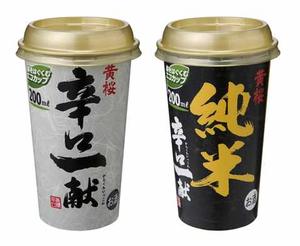
• Toppan's Eco Flat Cup is able to maintain its shape, even when subjected to large temperature changes.
    Toppan's Eco Flat Cup is able to maintain its shape, even when subjected to large temperature changes.

Close×

Toppan Printing, one of Japan's leading packaging innovators, has developed a new grade of its paper-based high barrier Eco Flat Cup for alcoholic beverages, which it showcased at Tokyo Pack 2012.

The new technology prevents deformation of the cup due to temperature changes, hence it can be used for alcoholic drinks that require high temperature or aseptic filling such as Japanese sake, shochu and fruit wines.

The market size for non-carbonated alcoholic drinks was recorded as 1.5 trillion yen ($17.7 billion) in 2011. The market is also seeing a shift towards the adoption of environment-friendly containers like PET bottles and pouches for alcoholic beverages, with the addition of the easy to recycle Eco Flat Cup as a new option.

Alcoholic drinks require high temperature filling for sterilisation. In addition to cooling after filling, many low-alcohol products are sold chilled in stores, and with the significant changes in temperature conditions, the volume of air inside the container contracts and the cup can become deformed.

With the new Eco Flat Cup, the structure of the lid has been formed into a dome shape, which allows it to absorb differences in volume when the pressure inside the container decreases due to cooling and refrigeration after filling, preventing cup deformation.

Ease of opening has also been improved by using an easy-opening sealant film on the lid. Further, sealing properties of the cup have been enhanced and this in turn has improved shelf life.

A typical problem encountered with paper-based cups is oxygen entering the cup through the paper seal section and causing deterioration of the contents.

Toppan Printing says it has resolved this issue by applying a protective technology using its clear high barrier GL Film to cover the entire cup. GL Film is generic name for high barrier films developed by Toppan Printing and in wide use globally; it claims the world's highest level barrier properties, the barrier achieved with vapour deposition processing technology.

Another difficulty resolved with the new version of the cup is the elimination of unevenness of the paper on the flange section, which prevented a good seal of the lid. This has been resolved using form processing technology.

The first iteration of the Eco Flat Cup went on sale in 2011, with the full scale launch scheduled for the fourth quarter of 2012.

First to market with the Eco Flat Cup cup is Kizakura Co, for two of its sake products – Kizakura Karakuchi Ikkon and Kizakura Junmai Karakuchi Ikkon (pictured).

Food & Drink Business

The federal government is conducting a review of the Horticulture Code of Conduct, following several difficult years for farmers and growers, with rapidly rising levels of dissatisfaction.

The federal government has committed to developing an Industry Code of Practice for labelling plant-based protein products, supported by Food Standards Australia New Zealand (FSANZ) research and led by the Alternative Proteins Council (APC).

Consumers may soon see products containing cocoa-free chocolate appearing on shelves, as confectionery manufacturers look to manage increased volatility in the price and supply of cocoa beans, according to research from agribusiness banking specialist, Rabobank.