Epson has added white ink capability to its flagship label printing inkjet press, the SurePress L-4033A, in a move designed to enhance print quality, even on clear and metallic substrates, for packaging converters.
The new model SurePress L-4033AW adds white ink to the company’s AQ ink set, which it says produces enhanced print quality and more accurate colour reproduction on a wide variety of substrates without pre-coating or treatment.
“The wide colour gamut available with the L-4033AW and seven colour AQ ink set ensures customers can produce not only solid, opaque white printing but also precise colour matching and accurate reproduction of spot and speciality colours to meet a client’s precise needs,” Epson’s business unit manager, Craig Heckenburg, said.
Designed specifically for label converters taking the first steps into digital printing or expanding existing digital printing capacity, as well as large scale product manufacturers and commercial printers, the Epson SurePress L-4033A and L-4033AW models fit into existing digital workflows and are offered with a range of third party pre-and post-press options.
The new model printer comes soon after the company announced its first SurePress installed in the Oceania region, at Admark Visual Imaging's main production centre in Hamilton, New Zealand.
Heckenburh said the Admark installation was just one of a number now underway in the region.
“With several SurePress installations underway in the region driven by the increasing demand for high-quality customised shorter run label production, the response to SurePress’s capabilities and benefits has been very strong,” he said.
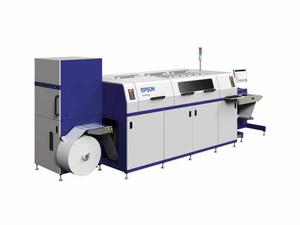 Epson says its new SurePress L-4033AW label printer uses white ink to give converters higher quality label print options on a range of substrates.



