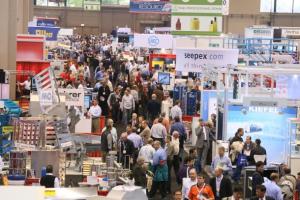
• As the US Pack Expo show prepares to open its doors to visitors in Las Vegas, new research suggests the world market for packaging machinery will enjoy annual growth of 4.6 per cent a year to 2017.
    As the US Pack Expo show prepares to open its doors to visitors in Las Vegas, new research suggests the world market for packaging machinery will enjoy annual growth of 4.6 per cent a year to 2017.

Close×

An improving business climate and a surge in demand in developing markets, particularly China and India, will spur a 4.6 per cent annual surge in worldwide demand for packaging machinery over the next four years, a new report says.

The study, by The Freedonia Group, says the world market for packaging machines will reach $US41.8 billion ($A44.5 billion) in 2017.

The market research company said improving economic conditions would spur an expansion of investment, manufacture and demand for packaging equipment to achieve that growth.

The market will also benefit for increased demand from developing markets, Freedonia said, with growth in the Asia-Pacific region set to reach 5.7 per cent annually, led by such markets as India and China.

Freedonia said China and India together will account for 21 per cent of global packaging machinery demand in 2017 as rising personal incomes in these countries support higher packaging demand.

Indeed, the report predicts China will overtake the current leading national packaging market, the United States, by 2017, though the US will continue to account for a sixth of the total world demand for packaging equipment.

While food manufacturing will remain the largest market for packaging equipment, with approximately 40 per cent of total sales, Freedonia notes that packaging machines for chemicals, pharmaceuticals, and personal care products will post the fastest sales gains over the period, again driven by rising living stands in developing markets.

Food & Drink Business

Wine Australia is running a coordinated program of trade, education and promotional activity across the Asia Pacific, backed by federal government funding, as the sector works to rebuild demand in China and diversify into Southeast Asia.

Australian beef exporters face a 55 per cent tariff on shipments to China for the rest of 2026 after the country exhausted its annual safeguard quota in under six months, removing tariff-free access to one of the sector’s largest markets.

A Western Australian truffle grower says it has unearthed the state’s first cultivated white truffle, opening a potential new product line for a region that already supplies the bulk of the Southern Hemisphere’s black truffle.