Cardia Bioplastics has secured orders from four additional councils in Victoria for its compostable waste management bags.
For use in organic waste diversion programs, Cardia's compostable bin liners help councils and households make more efficient use of food scraps and garden waste in industrial compost.
Food and garden waste are the main sources of organic waste in landfills, and most households are currently placing organic material such as food scraps and garden waste into their residual waste bin, according to the Halve Waste and City to Soil programs. The average household garbage is made up of 20 per cent food waste and nine per cent garden waste – much of which could could be composted and used by local growers to improve soil fertility.
Over the last five years, Cardia has worked with councils, waste management companies and industrial composters to validate and optimise the product offering of its compostable kitchen tidy bags and kitchen tidy bins, from household use to waste collection and composting.
Cardia Bioplastics, a subsidiary of SECOS Group Limited, recently merged with Stellar Films Group.
Stellar Australia’s cast film manufacturing plant was re-opened in Melbourne in April, with the capacity to produce up to 6000 tonnes of hygiene cast film per annum, supplying global hygiene companies with applications such as nappy back sheets and sanitary napkins.
Since the reopening, the business has secured sales close to $400,000 per month, representing annualised sales revenue of $4,800,000 per annum.
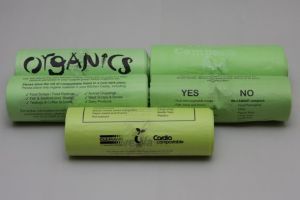 Cardia's compostable bin liners help councils and households make more efficient use of food scraps and garden waste in industrial compost.



