Cardia Bioplastics has followed up its recent successes in the North American market with the announcement of an agreement with US injection moulded food packaging supplier Highland Plastics to develop sustainable packaging systems for consumer and institutional applications.
The collaboration agreement was announced at a joint marketing launch at the recent West Pack Trade Show 2013 in Anaheim, California.
Under the agreement, Highland Plastics said it would now aim offer innovative packaging products with reduced dependence on finite oil resources and lower carbon footprint through the use of Cardia's Biohybrid resin technology.
The latest deal builds on recent significant successes by Cardia in the US market with companies such as appliance maker Breville and Custom Bioplastics, a maker of blown and cast film plastic packaging.
Cardia's Biohybrid proprietary technology combines renewable thermoplastics with polyolefin material to reduce dependence on finite oil resources and to reduce carbon footprint.
The president of Highland Plastics, Jim Nelson, said the Cardia technology fitted perfectly with its strategy of supplying containers made from sustainable sources.
“The combination of packaging performance, environmental profile and cost effectiveness made Cardia Biohybrid technology the solution for Highland Plastics’ responsible packaging needs,” he said.
“Cardia’s Biohybrid technology fits into our strategy of being able to immediately offer our customers a responsible packaging offering providing a lower carbon footprint.”
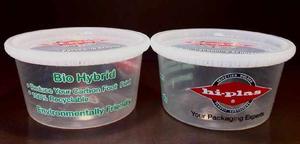 Highland Plastics will produce food-grade containers using Cardia's Biohybrid technology at its California-based plastic manufacturing facilities.