Cardia Bioplastics has secured an exclusive annual supply contract for its renewable Biohybrid kitchen bags to the City District of Shanghai Pudong, in China. As part of the agreement, Cardia will annually supply an estimated $1.2 million worth of the kitchen bags to approximately 20 per cent of households in the region.
In recent years, Shanghai Pudong has focused heavily on environmental initiatives, such as targeting waste separation at the source. Following the World Expo in 2010, Shanghai introduced and implemented an organic waste separation process to separate plant and food scraps at the household level, as these scraps form a large part of the Chinese domestic waste stream.
Dr Frank Glatz, managing director of Cardia Bioplastics, said the Biohybrid bags would be a critical step towards the efficient management of domestic waste in China.
“Cardia is the only supplier of these products to the Shanghai Pudong City Council – these bags are tailored specifically for the separation and collection of food and domestic waste,” said Glatz.
Following the successful six-month trial of the Biohybrid kitchen bags in the region earlier this year, Shanghai Pudong increased its supply from approximately five per cent to 20 per cent of households in this region. This has opened up a significant opportunity for Cardia to expand the roll-out in Pudong and secure additional city councils in China.
Pudong is one of four city councils in China that has conducted waste management trials using Cardia’s products. The other three councils in the trial phase are Nanjing, Hangzhou and Yuhang and Cardia is looking to expand into other provinces of China.
“We are delighted to be partnering with city councils that are committed to creating a greener and more sustainable future,” said Glatz.
“We will continue to work with Chinese city councils to manage household waste sustainability and implement initiatives to reduce the environmental footprint.”
Cardia also has a certified compostable offering for its organic waste management business with trials underway in Australia, New Zealand, Malaysia, Canada, USA, Brazil and the UK.
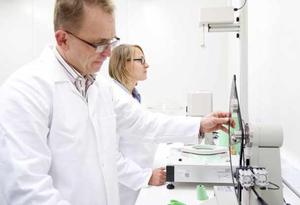 Early materials testing on Cadia's Biohybrid kitchen waste bags at the company's Global Applications Development Centre in Melbourne.



