The growing Australian bioplastics market will again be a highlight of AUSPACK PLUS 2013, with organisers confirming its successful Bioplastics Pavilion will make a return to next year's event.
The pavilion was originally introduced at the 2009 show to allow key bioplastics companies to come together under one roof and to help trade visitors gain a perspective on the advantages of using bioplastics for packaging.
The pavilion will consist of members of the Australasian Bioplastics Association (ABA), the peak Industry body for manufacturers, converters and distributors of bioplastic products and materials throughout Australia and New Zealand.
Companies that have already signed on to be a part of the pavilion include BASF Australia, Chem-Supply, Nature Works, Sun Australia Environmental Materials, Innovia Films, Novamont and Cardia Bioplastics. Other ABA members such as Because We Care will have a separate exhibition stand in the same area as the pavilion.
The business director Australia and New Zealand – Plastics, for BASF Australia, Rowan Williams, said the company was keen to once again showcase its range of sustainable packaging solutions at AUSPACK PLUS 2013.
“BASF provides a number of products that can help its customers to improve the sustainability of packaging. Examples include the partially bio-based, compostable polymers ecovio and ecoflex,” Williams said.
The business development manager of Chem-Supply, Stephen Morris, said the company's decision to exhibit within the bioplastics pavilion was designed to promote Chem-Supply’s new agency for compostable plastics – Germany's FKuR GmbH.
Organised by the Australian Packaging and Processing Machinery Association (APPMA), AUSPACK PLUS 2013 will be held at the Sydney Showgrounds, Sydney Olympic Park from 7-10 May next year.
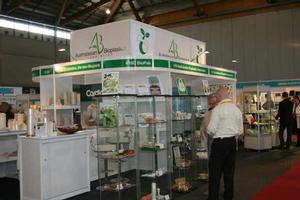 The successful Bioplastics Pavilion will return to AUSPACK PLUS 2013 in Sydney.



