Poppet International's run of awards celebrating its innovative packaging has continued with its Bebi infant juice bottle picking up the award for best new food and drink packaging innovation at last week's Gulfood 2013 trade show in Dubai.
The win follows its trio of wins at last year's Australian Packaging Design Awards - where it was named 'Best of Show' and wom gold awards in the beverages and innovation categories - and its triumph in this year's WorldStar Packaging Awards, where it was one of six Australian prize winners. It also won a major New Zealand packaging award.
Peter Bares, managing director of Poppet International, said the product, which incorporates a single-use sterile teat, was on show at the Dubai event in order to attract interest in the lucrative Middle Eastern and Asian markets. It was originally launched on the Australian market in 2011 to test the waters before wider international release.
Organised by The Dubai World Trade Centre (DWTC), the Gulfood awards were judged by an international panel of independent industry experts and attracted a record number of entries in 24 categories.
"It is exciting to see regional players in the food and beverage industry raise the bar for excellence and innovation every year," said Trixee Loh, senior vice-president of the DWTC.
"As Gulfood continues to remain the largest annual food and hospitality trade show in the world, it is important to recognise those companies that contribute to the development of the industry through their creativity and inventiveness.”
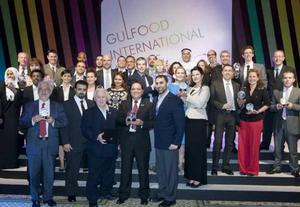 The winners of this year's Gulfood Awards, announced last week at the opening of the annual Gulfood food processing and packaging equipment show in Dubai.



