A packaging and distribution program designed to deliver life-saving medicines to remote sub-Saharan villages has been named the sole diamond winner in this year's DuPont Award for Packaging Innovation
The program, AidPod by UK design firm pi 3, also picked up the award for food security in the winners list of the DuPont Awards, which this year celebrates its 25th anniversary.
AidPod was developed for ColaLife, an independent non-profit organisation that leverages The Coca-Cola Company's distribution network to get medicines and instructions to remote areas.
The AidPod is a self-contained anti-diarrheal kit that tucks between bottles in Coca-Cola crates. This winning-generation AidPod has evolved to become part of the kit itself, serving as both a single, measured dose mixing and drinking vessel.
"It's not just small packages that good things come in – it's clever ones, too," US senator Chris Coons, chair of the US Senate Foreign Relations Subcommittee on African Affairs, said.
"The AidPod is proof that the combination of ingenuity, innovation and inspiration is powerful enough to overcome the world's greatest humanitarian challenges.
"ColaLife and pi 3's pairing of smart packaging with an effective distribution platform has enormous potential to make a real difference in sub-Saharan Africa."
The DuPont Award for Packaging Innovation is the industry's longest-running, global, independently judged recognition of innovation and collaboration throughout the packaging chain.
This year the independent judges granted one diamond, four gold and 10 silver awards for packaging in a diverse set of markets.
While Australian design did not figure in this year's list of main winners, the German-based flexibles business of Australia's Amcor was a silver winner for its Formpack pharmaceutical blister pack.
Amcor redesigned its pharmaceutical blister pack to improve moisture protection. The company reduced the size of the single cavities in the blister packs and removed the perforation lines so that moisture can diffuse only though the open edge of the blister.
This improves the blister’s moisture protection by more than 40 per cent and reduces the quantity of material that is used to pack the same number of tablets by 33 per cent.
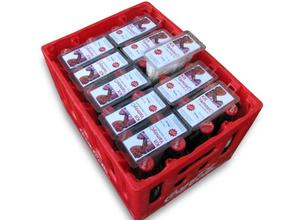 AidPod for ColaLife delivers life-saving medicine to children in remote villages through Coca-Cola's international distribution channels.



