The Australian Food and Grocery Council (AFGC) has been quick to respond to last week's Federal Court rejection of the Northern Territory's (NT) container deposit scheme (CDS), launching a $5 million NT Bin Network in the immediate aftermath of the court's decision.
It followed this up days later by releasing data from a new report citing a continued rise in the national drink container recycling rates.
The Federal Court last week struck down the NT's year-old CDS, saying the scheme conflicted with Commonwealth laws.
The NT's scheme had set a ten cent cash back reward for consumers who returned used containers to approved depots. But the court sided with such companies as Coca-Cola Amatil, Schweppes and Lion, all of whom had challenged the territory's CDS on the basis that it breached federal law as it required different production processes for the same product in different states and territories.
South Australia's older CDS scheme remained untouched, overcoming the NT's hurdles because it had long been granted an exemption from such provisions, back in 1992.
The AFGC, which had been among critics of the NT CDS, moved quickly to capitalise on the decision. It said its bin network plan, a five-year industry investment solution to boost recycling rates and reduce litter in NT, would achieve recycling benefits without the costs associated with the CDS.
“The NT Bin Network will increase recycling and reduce litter arising from all packaging without costing Territory families, unlike the failed ‘Cash for Containers’ scheme which only focused on beverage containers,” the AFGC said.
It said the scheme would focus on: installing recycling infrastructure for both glass and plastic packaging; installing ‘away from home’ recycling bins in commercial venues; establishing ‘drop off’ recycling facilities for all packaging and newsprint in Katherine and Alice Springs; and funding local community groups to clean up all litter, not just beverage containers.
“The NT Bin Network is founded on practical solutions for the Territory, address all packaging and all litter, not just beverage containers, will come at no cost to Territorians and is backed by industry dollars,” AFGC chief executive, Gary Dawson, said.
The scheme will also be extended nationwide in the near future.
“Industry is ready to roll out a $100 million dollar national recycling scheme, the National Bin Network, that builds on the practical, targeted initiatives that we know from experience, and the results released today, do work. Our scheme delivers for the environment, but is fully industry funded and won’t cost families like a drink container tax would,” Dawson said.
Days later, the group released data showing that Australia’s drink container recycling rates are continuing to rise, with an extra 42,284 tonnes recycled in 2011-12 compared to the previous year.
The report, from waste analysts Industry Edge and Equilibrium, indicated that a combination of manufacturers’ active light-weighting of PET plastic drink bottles and significant additional recycling – particularly of glass – had driven a further increase in overall recycling rates despite an increase in the overall number of containers in the market.
“These results confirm the effectiveness of the current recycling schemes, through both the AFGC’s Packaging Stewardship Forum, and the Australian Packaging Covenant, that are delivering sustained improvements in beverage container recycling at no cost to the community,” Dawson said.
The study also found that competition in kerbside recycling had strengthened and that reported prices being paid to councils for recyclables collected reached record highs in some states, reflecting rising commodity prices, the efficiency of mature material recovery facilities, effective householder participation and the impact of new investment and technology.
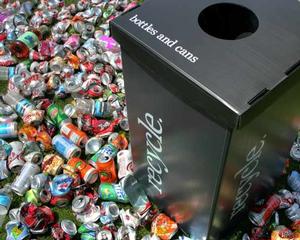 The Australian Food and Grocery has announced a new Bin Network campaign to encourage consumer recycling in the wake of the legal defeat of the Northern Territory's container deposit scheme.



