



An award-winning innovation by RMIT Industrial Design graduate Maddison Ryder sees scrap lettuce leaves repurposed to make biodegradable rigid material suitable for packaging and tableware applications.
Winner in the Tertiary category at the Victorian Design Challenge in March, the 'Lettuce Eat' project was developed as part of Industrial Design Honours graduate Madison Ryder's final-year thesis.
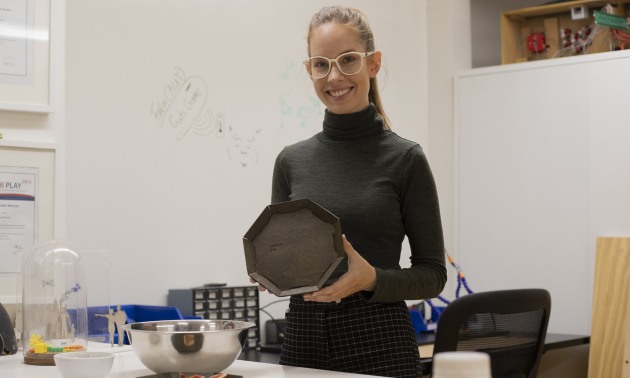
Speaking to PKN about the project Ryder said she was inspired to develop a sustainable alternative to single-use plastics after watching the ABC War on Waste program and learning about how much food waste there is in Australia.
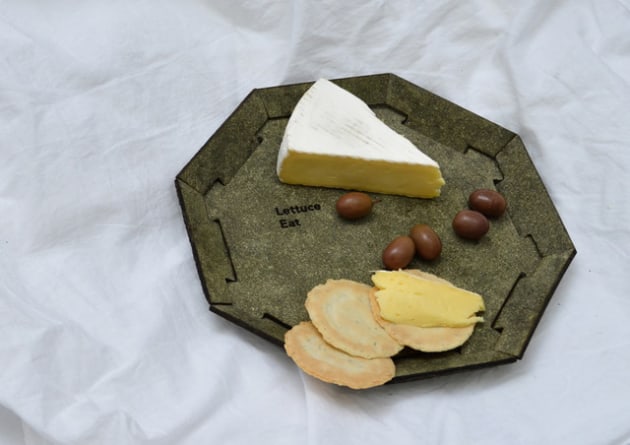
She set about developing a material made almost entirely from scrap iceberg lettuce leaves, which she salvaged from local supermarkets. Ryder says the process involves drying, mixing and rolling to form workable sheets. The dried lettuce is mixed with Xanthan gum to yield a robust material with surprising strength.
“The finished material is treated with small amounts of linseed oil and beeswax to create sufficient barrier properties during single-use of the product, but not so much to prevent rapid bio-degradation,” Ryder says.
While the material has only been developed on a pilot scale to date, Ryder says the project has potential for a commercial future and that she has already received interest for funding to continue research into scaling up the material production.
“At the moment producing a plate is a very labour-intensive process. It takes a few days to produce a plate. But with more development we’ll be able to rethink the product for commercial production.”
Commenting on the material's properties, Ryder says it is “surprisingly dense and hard” and that if the production were to be scaled up successfully, she could see it competing with paper-based products for packaging and tableware applications in the future.


