



University of Sydney research fellow Dr Sina Naficy has been named on Australia's Most Innovative Engineers 2019 list, for his 3D-printed flexible food sensors. The new technology can detect gases generated by bacteria in packaged food and aims to reduce food waste.
Published annually in Engineer Australia's magazine create, Australia's Most Innovative Engineers list recognises the role of engineers across a number of industries, including building and construction, electronics and communications, and manufacturing and automation. Dr Naficy is among the 30 engineers on this year's list.
Studies on food waste estimate that two-thirds of food waste could be avoided if food quality could be evaluated. Naficy's 3D-printed electrical gas sensors are designed to be printed on flexible substrates that can then be transferred on to the packaging film prior to the packaging process.
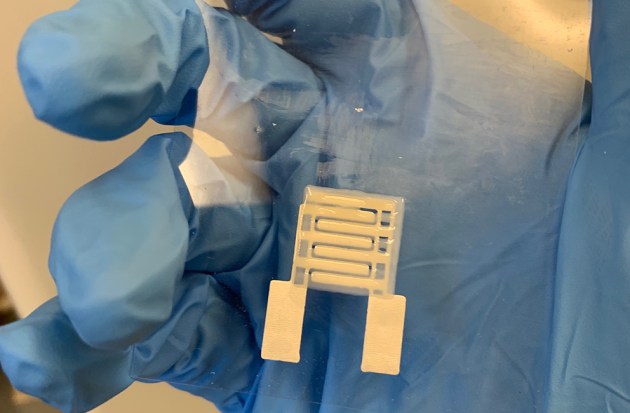
“Our vision is to enable inkjet or 3D printing of such sensors to make them easily translatable for high throughput packaging industry,” said Naficy.
“In this approach, specifically designed inks will be provided to the manufacturers to perform the 3D inkjet printing of the sensors. This could be performed either by the packaging companies or by a third party.”
Food sensors and flexible sensors hold great potential, says Naficy, as they can provide data driven information for consumers, retailers and producers about the state of the food product.
Naficy and his team mainly focus on electrical sensors as the information can be recorded without the need to visually inspect the food, as the electrical properties of the active sensor components will change with various chemicals (e.g. ammonia, carbon dioxide, fatty acids) that are produced during food spoilage.
“The change in electrical properties of the active components of sensors will be detected wirelessly. Therefore, the user is able to monitor how the state of packaged food is changing over time,” he said.
“Through this approach, anybody along the food supply chain should be able to know exactly what the state of food is. Such information will assist for better decision making.”
“For instance, the retailer knows which food is getting closer to go off so they can place them on display regardless of what the expiry date says. Or the distributors know that their stock is going off faster or slower than expected, etc. This should help preventing unnecessary food waste.”
Naficy says the main obstacle to overcome is integrating the sensors in “very small electrical tags” and remain in the development stage for now.
“That being said, we have made great progresses in designing the materials and engineering them to become 3D printable.”


