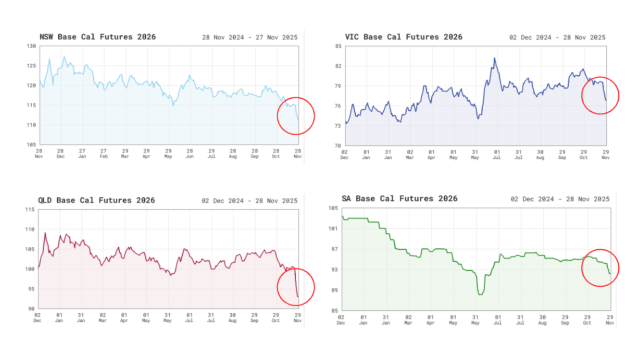
Electricity prices have hit their lowest point this year, creating a rare opportunity for businesses to secure cheaper electricity.
[Choice Energy is an APPMA Sponsor.]
Historically, energy costs usually climb as we move into the warmer months, but right now, wholesale pricing has taken an unexpected dip across all states, but especially in NSW and Queensland. NSW has seen reductions of around seven per cent, and Queensland prices have dropped by roughly 10 per cent.
This drop in prices is a great chance to lock in a better energy deal before things change again. With how up-and-down the market has been lately (and those painful high prices we’ve all seen), now’s the perfect time to check whether you’re still on a good rate.
Are you on a current electricity contract with a fixed end date? No worries. We can secure the current rates now through forward contracting.
Forward contracting means locking in your next electricity or gas agreement before your current one expires. By securing future energy rates in advance (often six to 18 months ahead) you can avoid being caught out by sudden market spikes and have genuine control of how much you are paying and why.
Now is a great window of opportunity to secure better pricing and gain peace of mind. The energy market can be volatile, and given the expensive pricing we’ve seen in previous months, it’s worth reviewing your current energy rates.
For a free energy assessment with Choice Energy, send a copy of your latest energy bill directly to sudha.kandarpa@choiceenergy.com.au or call 0483 910 840.