


KHS has introduced its new Innopack Kisters Wrap-aroundShrinkPaperPacker Advanced (WSPP A), which comes with a modular design for greater flexibility to deliver “every packaging option imaginable” for beverage cans.
With its combination of process modules, the line-compatible machine can process three different types of secondary packaging – from wrap-around cartons where the pack is enclosed in cardboard, to trays with or without a paper or shrink film wrapping, and finally cardboard pads wrapped in paper or shrink film.
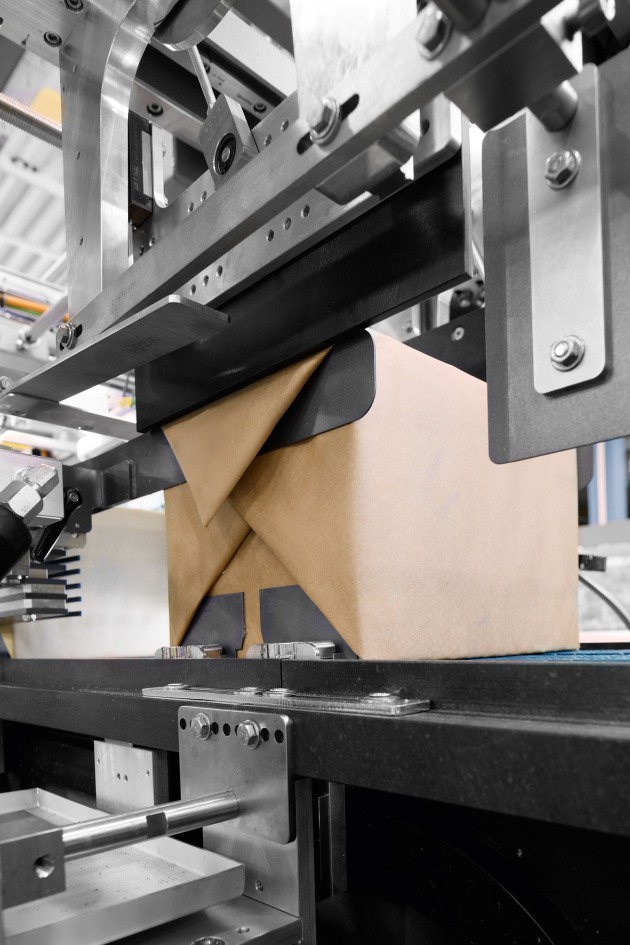
The machine packages cylindrical containers, especially beverage cans, whose compact shape and even surface make them suitable for wrapping in paper. This is something KHS has been working on since the beginning 2020.
“Paper as a packaging material is still a novelty on the beverage market, however, this alternative is already definitely meeting with great interest from beverage canners,” says Ernst van Wickeren, packaging product manager for KHS.
“Many of the customers who sell organic beverages, for instances, also want to convey the notion of ecology through the packaging – and in doing so are satisfying a rapidly growing consumer demand.”
The WSPP A is facilitated by the modular design of all Innopack Kisters Advanced packaging machines, which enables an existing Innopack Kisters WSP or Innopack Kisters WPP to be retrofitted as a WSSP A.
On the technical front, the new paper wrapping function needed adjustments to be made to the former film-wrapping module, while a new module for paper folding and gluing had to be devised.
In the folding module folding tools tightly fold and erect the paper around the sides of the packs with absolute precision, while the separate InnoHotMelt applicator with its needle valves “ensures flawless glue application”.
An optional automatic glue pellet feed system is also available for uninterrupted production.
For more information, visit the KHS website here.


