


Visy has released independently verified lifecycle analysis (LCA) results indicating its fibre-based insulation product, Visycell, delivers measurable environmental benefits compared with expanded polystyrene (EPS).
The peer-reviewed study, conducted by a certified independent practitioner, assessed a cardboard box lined with Visycell against an EPS equivalent across two applications: seafood hog boxes and meal-kit delivery packaging.
In seafood hog box* systems, Visycell recorded 41 per cent lower greenhouse gas emissions and 14 per cent less water use than EPS, along with an 87 per cent reduction in impact on the aquatic environment from microplastics.
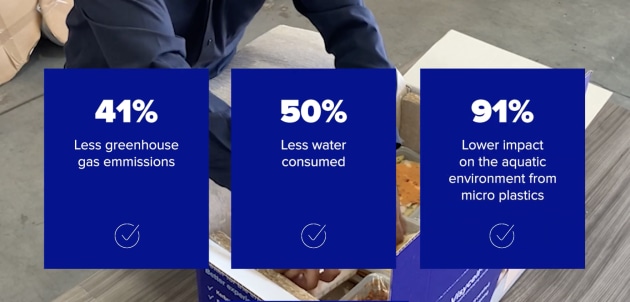
For meal-kit delivery packaging, the results were more pronounced, with Visycell again delivering 41 per cent lower greenhouse gas emissions, alongside a 50 per cent reduction in water consumption and a 91 per cent lower impact from microplastics.
Chris Gatto, sustainability manager at Visy, said the findings highlight the broader environmental benefits of switching materials. “By switching to Visycell, businesses aren't just protecting their products, they're helping to protect our environment, save water, and reduce emissions,” he said.
According to the Australian Packaging Covenant Organisation (APCO), around 28 per cent of post-consumer EPS is currently recovered in Australia. Visycell, by contrast, is designed to be recyclable through kerbside paper and cardboard streams, positioning it as an alternative for businesses seeking to reduce environmental impacts across their packaging systems.
Visy said full details of the LCA assumptions and limitations are available in its Visycell lifecycle analysis documentation.
* large, insulated box used to keep fresh seafood cold and protected during transport and storage.


