


Beverage equipment leader Krones has responded to the growing craft beer trend with a can filler for the lower output range. See it at AUSPACK on stand 330.
The craft beer culture is blazing a trail into the consumers’ favour, says global beverage equipment specialist Krones.
Far-fetched though the craft brewer’s flavouring ideas may sometimes be, they, too, need reliable tools for filling beers of consistently high quality.
Krones has taken this on board, and since beer in cans plays a major role for craft brewers, it has developed a can filler for the lower output range in the form of the Craftmate.
With its modularised design, this volumetric filler with 24 filling valves constitutes an extension to Krones’ product portfolio.
Depending on the can volume and product parameters concerned, the machine’s output lies between 6,000 and 18,000 cans per hour. It is suitable for both small firms and craft breweries.
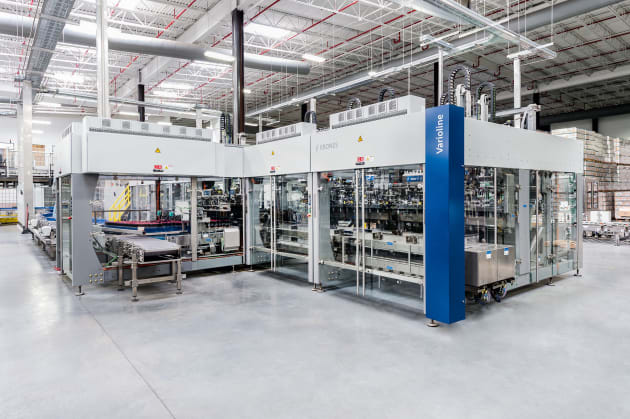
Krones will also be exhibiting other models from its product portfolio. The Varioline, for example, is a flexible packaging system that’s able to create primary, secondary and even tertiary packages, depending on the machine configuration involved.
There will be plenty of information on the BEVkeg, a solution for the disposable keg market. It assures high beverage quality from the filler through to the consumer’s glass.
Krones’ Evoguard subsidiary will also be showcasing its series of valves manufactured in-house.
The range includes disk valves, seat valves, double-seat valves, aseptic seat valves, and aseptic double-seat valves.


