


Idealpack general manager Giulio Ghisolfi announced a breakthrough in flexible packaging in the 2017 National Technical Forums at Auspack.
Idealpack has introduced a packaging solution which it claims will improve the application of reclosable spouts on aseptically filled stand-up pouches (SUPs).
According to GM Giulio Ghisolfi, the Aseptic Spouted Pouch (ASP), which launched for the first time in Australia at Auspack, is based on the idea of creating a new double-gusset pouch with an external piercing spout.
Ghisolfi says this application offers quality standards, efficiency, and an increase in shelf life.
“Our machine offers high productivity at over 250 pieces a minute, and the lowest possible head space in the pouch," he says.
The ASP solution suits food products in the baby and children’s market, housing such things as organic fruit and vegetables.
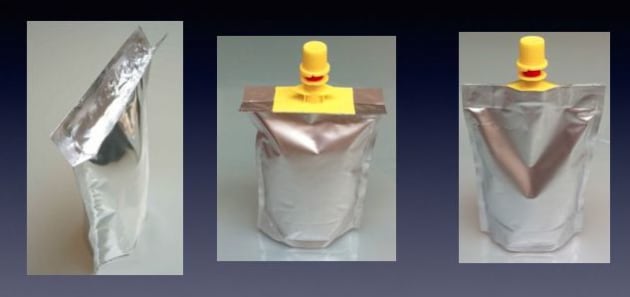
It also can be used to pack coconut water “with particulates”, as well as ready-made meals.
The solution is licensed to The Australian Pouch Company, otherwise known as Auspouch, for Oceania markets.
According to the company, the technology prevents sealing spout problems, which may occur during the filling stage on existing HFFS machines which are difficult to keep perfectly decontaminated.
“The solution is light, versatile, and flexible, and adaptable to different processes,” Ghisolfi says.
The aseptic pouch avoids the need for preservatives and ensures a sterilised package.
There are also cost, storage and distribution advantages in the company's OHMIC heating system.
“The food material serves as an electrical resistor and is heated by passing electricity through it," Ghisolfi says.
"Electrical energy is dissipated into heat, which results in rapid and uniform heating.
"OHMIC technology is already validated, industrially applied, and reliable."
This system, according to Idealpack, maintains flavour quality, food colour, and is suitable for treating extremely viscous product, and product with an extremely high solid to liquid ratio.


