Martogg has recently commissioned a third Vacurema Line to increase capacity of Australian-made, food-grade, recycled PET for the Australian packaging industry.
Its largest line to date, it will contribute an additional 12,000 tonnes of rPET, taking the company’s capacity to 23,000 tonnes per annum.
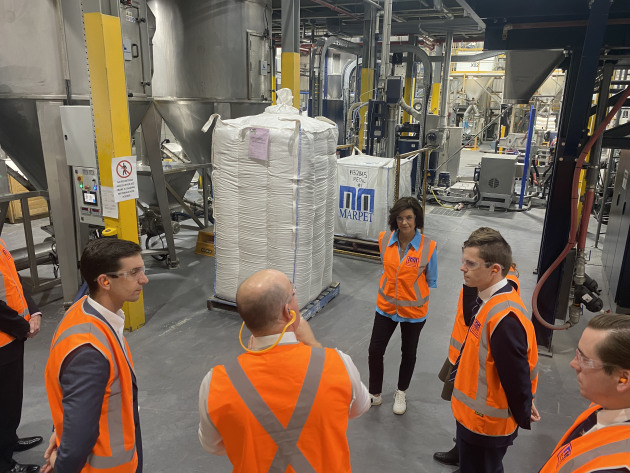
Trevor Evans, Assistant Minister for Waste Management and the Environment, visited Martogg’s sales and manufacturing facility located in Dandenong South, Victoria, for a tour of the facility, and to discuss the involvement with Sally Williams, also know as Sustainable Sally, in terms of educating all stakeholders, from consumers through to the brand owners.
The visit also included a closer look at Martogg’s marPET process and production facility. "We were delighted to take Minister Evans around our marPET plant, so that he and his team could see how an independently-owned Australian company like Martogg has readily responded to the need for more plastics recycling, to help reduce waste to landfill and plastic pollution of our environment," said a Martogg spokesperson.
"We welcome the support initiatives from both the federal and Victorian state governments' for the Australian recycling industry."
Discussions were held on the current and future investment focus on sustainable resins for the Australian packaging industry, as well as the partnership with Sustainable Sally, which spearheads a focus on education to all stakeholders – from consumers to brands – around the importance of Australian-made, recycled content.
“This is exactly what all Australians want to see – Australia becoming more self-sufficient and self-reliant,” Evans said.
“Having the infrastructure and facilities so that we can take more of our waste plastics, recover them, recycle them, and turn them into the next-generation of fantastic products on the shelves.”